

News
Here you will find the latest analyses, market trends, and regulatory developments related to photovoltaics and energy storage. Our editorial team breaks down complex topics into easy-to-understand terms—with concrete recommendations for investors and businesses.

Solar Power for Freelancers: The Paradox for the Self-Employed in 2026
German self-employed individuals and freelancers hold record amounts in bank deposits—with a real return that barely exceeds zero after taxes and inflation. Photovoltaics as an investment offers a 6–10% annual return, government-backed cash flows, and tax benefits that surpass those of all other asset classes. This guide provides concrete calculations—including a sample calculation for a freelancer with €180,000 in annual profit—and a clear overview of the opportunities and risks.

PV Investment Italy 2026: Market Analysis, FER-X & Strategies
Italy’s solar market is set for structural growth in 2026—but the Decreto Bollette, TIDE reform, and regulatory uncertainty make blind investments risky. FER-X auctions with 818 bids for 10+ GW, a national storage target of 58 GWh by 2030, and megaprojects like the 3-GWh Airengy storage project in Brindisi show that the market is polarizing between secure winners and unprotected losers. What investors need to know in 2026—and why the German market model remains the better foundation for many.

How can PV investors save on taxes in 2026 using IAB and depreciation?
Anyone investing in a solar power system or planning to install one for their business has more tax flexibility than is often realized. This article provides an overview of the most important tools—from investment tax credits and depreciation to sales tax. We explain how these mechanisms work in general. A tax advisor is essential for applying this information to your specific situation.
The Logic Energy Investor Model
With Logic Energy, you purchase your own solar power system—Logic Energy builds and operates it, and you collect the electricity revenue. No investment funds, no power purchase agreements. Return on investment: 6–10% per year, term of 20–40 years, with over 70% tax depreciation possible in the first year.

Solar Peak Act: What Investors in PV Systems Need to Know Now
Since February 25, 2025, a stricter rule has applied to new photovoltaic systems in Germany: As soon as the wholesale electricity price turns negative, the EEG feed-in tariff is suspended—immediately, with no waiting period. Legislators are responding to a trend that is clearly evident in the figures: In 2023, there were 301 hours with negative wholesale prices; in 2024, this figure rose to 457 hours; and in 2025, it reached a total of 573 hours.¹ For investors, this is not just an abstract market statistic—it is a structural factor that directly influences the calculations for ongoing and planned projects.

Solar Investment in 2026: How Much Does a Solar System Cost? An Overview of Costs, Incentives, and Payback Period
In concrete terms, PV investment costs in 2026 mean: module prices at historic lows coincide with a regulatory window for the energy transition that closes in 2027 with the EEG reform. Turnkey rooftop systems cost €800–1,500/kWp depending on the system type, ground-mounted systems cost €600–1,000/kWp — and the investment deduction (IAB) under Section 7g of the German Income Tax Act (EStG) lowers the entry barrier by up to 50% of the net acquisition costs before the photovoltaic system even generates any electricity.

EEG Feed-in Tariffs in 2026: The Complete Guide for Investors and Businesses
The 2026 EEG feed-in tariff is 7.78 ct/kWh (partial feed-in) or 12.34 ct/kWh (full feed-in)—with a semi-annual reduction and a fundamental system change starting in 2027. Anyone who commissions a photovoltaic system by December 31, 2026, secures 20 years of guaranteed support under the proven EEG system—without the CfD repayment obligation that applies to all new systems starting in July 2027. This guide explains all current feed-in rates, historical trends since 2000, the difference between full and partial feed-in, and the consequences of the CfD reform for investors and businesses.

Solar System Return on Investment in 2026: Three Scenarios for Commercial and Industrial Properties with Their Own Systems
What will be the return on investment for commercial and industrial solar power systems in 2026—and when will the investment pay for itself? Three detailed scenarios show the actual returns for a manufacturing facility, a logistics center, and an open-space solar power system with direct sales—including all costs, factors that reduce returns, and the key difference between self-consumption and feeding electricity into the grid.

Direct Investment in Solar Power: What It Is, How It Works, and How It Differs from Funds
Anyone looking to invest in solar energy or renewable energy—whether through solar installations, photovoltaic investments, or direct investments in photovoltaics—will encounter at least four different models: closed-end solar funds, crowd investing via subordinated loans, solar ETFs—and direct photovoltaic investments. The names sound similar, but they involve fundamentally different legal relationships, tax structures, and risk profiles. This article provides you with an overview and all the information you need to make an informed decision—objectively, without any product pitches. It is aimed at investors, entrepreneurs, and anyone seriously considering whether a direct photovoltaic investment aligns with their tax and financial situation.

Utility Bill Decree (Law 49/2026): EU Blocks ETS Mechanism
Italy’s new energy decree—the Decreto Bollette—is the most significant regulatory intervention in the European electricity market in years. It lowers wholesale prices by subsidizing the marginal costs of fossil fuels, causes solar capture prices to plummet, and brings the PPA market to a standstill. For PV investors with exposure to Europe, this marks a turning point—and serves as a lesson in just how crucial regulatory stability is for long-term returns.

Direct Marketing of PV Electricity in 2026: Market Values, Market Premium, and Revenue Strategies
The 2025 annual market value for solar was 4.508 ct/kWh —half the average spot market price on the electricity exchange. What does this mean for PV systems of 100 kWp or more and for commercial businesses with their own photovoltaic systems? This guide to PV direct marketing explains market premiums, selecting a direct marketer, and four revenue strategies for 2026—including all monthly values, the profile factor of 0.505, and specific revenue scenarios for PV electricity.
Solar Power vs. Lignite 2025: How Solar Power Will Surpass Lignite and Natural Gas for the First Time
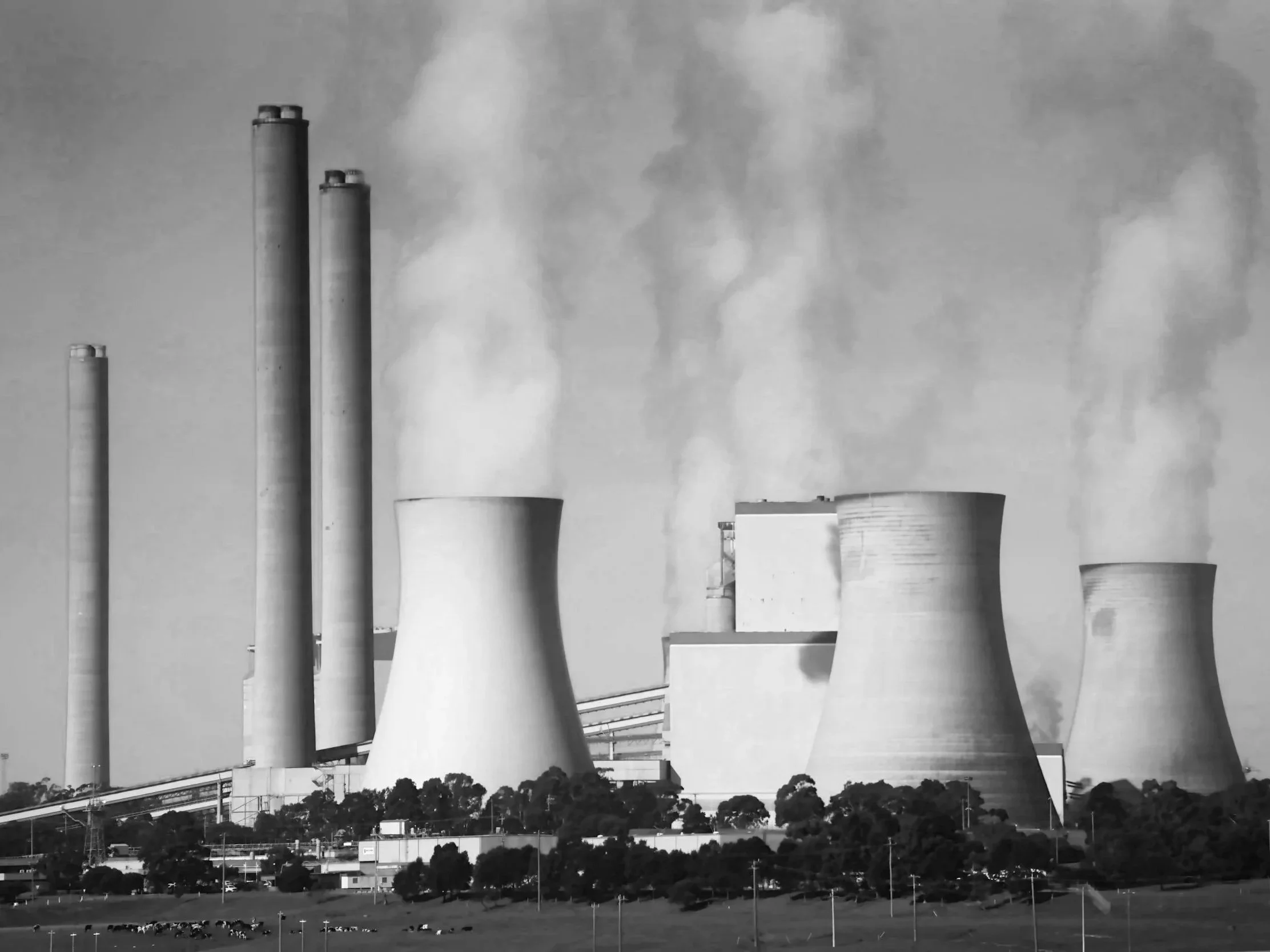
In 2025, solar power became Germany’s second-largest source of electricity for the first time, surpassing lignite. This marks a historic turning point—and sends a clear signal to anyone considering investments in renewable energy.

Declining feed-in tariff in 2026
The EEG feed-in tariff has been at a historic low since February 2026—a turning point for the old feed-in model. Anyone investing in solar power systems today or planning their own system no longer relies on the feed-in tariff, but rather on a smart revenue mix of self-consumption and direct sales. This article shows how investors and companies are strategically capitalizing on this downward trend.
Smart Meter Mandate in 2026: What You Need to Know Now as a Solar Panel Owner
Starting in 2026, the smart meter requirement will become a significant economic issue for operators of photovoltaic systems with a capacity of 7 kW or more: Anyone feeding electricity into the grid without a smart metering system will permanently lose 40% of their potential feed-in. This article is aimed at operators of photovoltaic systems, investors, and companies with their own PV systems, and explains what the smart meter requirement starting in 2026 actually means—from the legal framework and all deadlines to the new revenue models. Since February 25, 2025, the Solar Peak Act has fundamentally changed the rules of the game for all new PV systems of 7 kW or more: Anyone who does not have a smart metering system installed will permanently feed in only 60% of their output. At the same time, the requirement opens the door to energy sharing starting in June 2026 and dynamic rates—new revenue streams that are simply not accessible without a smart meter.

Peak Load Reserve: A New Market for Battery Storage – What Investors Need to Know in 2026
On January 22, 2026, a new market for instantaneous reserve capacity was launched in Germany. For the first time, battery storage systems can participate in this system service and thereby generate additional revenue. What this means for PV investors—opportunities, risks, and specific figures.

CfD Mandate 2027 – What PV Investors Need to Know
Starting in July 2027, Contracts for Difference (CfDs) will be mandatory for new PV systems with a capacity of 100 kW or more. As of April 2026, a draft bill has been released, and the CDU/CSU and SPD have agreed on the key provisions. What investors and companies need to decide by the deadline of December 31, 2026—and which strategies will still work after that.

PV Storage Arbitrage Returns: How Battery Storage Turns Negative Electricity Prices into Revenue
In 2025, nearly 16 percent of Germany’s solar power was generated during hours when grid prices were negative—and on peak days, as much as 90 percent. What sounds like the end of PV returns is, in fact, the starting signal for the next major investment opportunity: projects that integrate battery storage.

KraftNAV and Photovoltaics 2026: What the Grid Connection Reform Means for PV Investors and Businesses
On December 24, 2025, the amendment to the Power Plant Grid Connection Ordinance (KraftNAV) took effect—fundamentally changing the rules of the game for grid connections in Germany. Since then, energy storage systems have been completely excluded from the scope of the ordinance, and the first-come, first-served principle for allocating grid connections has been replaced by a maturity-based procedure. For PV investors and companies with their own systems, this means new opportunities, but also new questions when it comes to project planning.
The European Solar Divide: Where PV Investors Can Still Find Returns in 2026
While Austria’s solar market is slumping by 67%, Italy and Spain are seeing record growth thanks to subsidy programs worth billions. Germany is losing momentum. This dramatic split in the European PV market is creating unexpected investment opportunities—but only for the next 24 months. Find out which three specific investment strategies currently offer the best risk-return profiles and why country selection is more important than ever.

Amendment to the Energy Industry Act: What Changes Are in Store for PV Investors?
The 2025 Amendment to the Energy Industry Act (EnWG)—officially titled the Act Amending Energy Industry Law to Strengthen Consumer Protection in the Energy Sector—has been in effect since December 23, 2025. The amendment changes the conditions for PV investors and operators of photovoltaic systems in three specific areas: electricity storage systems are significantly strengthened under building codes and regulations; electric vehicles are treated like stationary storage systems for the first time; and energy sharing is given a legal basis. Anyone investing in PV systems in 2026 should be aware of these new energy law regulations.