Annual return
6–12%
For professionally designed commercial and industrial facilities
Duration
20–40 years old
Initial term: 20 years, including an extension option
Liability
unrestricted
Personal liability of the owner — mediplan Helm e.K.
Payback period
Ages 9–13
Depending on the type of system, location, and self-consumption
How do you become a PV investor with Logic Energy?
This guide answers the key questions for business owners and private investors in Germany who are considering investing in photovoltaics: suitability, process, returns, taxes, and risks. The photovoltaic market in Germany is at a turning point in 2026—the EU Commission’s EEG subsidy approval expires on December 31, 2026, and the CfD requirement takes effect on July 17, 2027 (Art. 19d of Regulation (EU) 2024/1747). Those who enter the market now secure grandfathering rights.
You can become a PV investor with Logic Energy by investing a minimum of €100,000 in equity to acquire a long-term profit share in one or more inverters of a photovoltaic system—or, optionally, entire systems. The base return is 6–10% per annum. The initial term is 20 years, with an option to extend up to 40 years. The contracting party is the personally liable mediplan Helm e.K.; site acquisition, permitting, construction, and operation are all handled by a single provider. As an investment in renewable energy, this model combines predictable tax benefits with long-term cash flow.
What makes us special
Why this topic will be particularly relevant in 2026
Anyone planning to invest in solar power in 2026 will encounter clear key figures for photovoltaic systems in Germany: As of the bidding deadline of March 1, 2026, the EEG cap for ground-mounted solar parks and rooftop solar systems in Germany is set at 5.79 ct/kWh in Segment 1 (Federal Network Agency). The EU Commission’s EEG subsidy approval expires on December 31, 2026; starting July 17, 2027, the CfD requirement applies to new price support contracts (Art. 19d of Regulation (EU) 2024/1747). A solar park awarded a contract before the reform retains grandfathering status.
At the same time, demand for solar energy continues to rise—large-scale photovoltaic plants are becoming increasingly important economically, especially during periods of high electricity prices. This makes now a strategically opportune time to enter the market.
What is a solar investor?
A PV investor makes photovoltaic investments, taking a long-term stake in a photovoltaic system and receiving the financial returns from electricity production. Those interested in getting started with photovoltaic investments will find options ranging from rooftop systems to MW-scale solar parks. At Logic Energy, participation in solar plants is structured through an inverter revenue share—optionally as the acquisition of an entire solar park or a rooftop system. The contractual partner is the personally liable mediplan Helm e.K.—no intermediate issuer level, no prospectus requirement under the German Investment Act (VermAnlG).
How a photovoltaic system operates efficiently:
In photovoltaics, sunlight is converted directly into electricity—a clean, sustainable energy source that has been proven effective for decades. In Germany, photovoltaic systems typically generate around 900–1,100 kWh per kWp per year (Fraunhofer ISE 2024). The solar power generated from solar energy is sold via EEG feed-in tariffs or direct marketing—both of which provide predictable revenue for 20 years. PPA contracts and battery storage marketing further stabilize the revenue profile.
As the Helm Group, Logic Energy has been supporting investors in Germany for over 40 years who wish to invest in photovoltaics—from site acquisition and grid connection to the operation of photovoltaic systems. The energy transition has made photovoltaics a cornerstone of renewable energy in Germany—in 2025, solar systems supplied approximately 87.5 TWh of solar power (70.6 TWh fed into the grid + 16.9 TWh for self-consumption), accounting for 16.8% of the German electricity mix (Fraunhofer ISE / energy-charts.info, January 2026). Photovoltaics has thus overtaken lignite and gas and is the second most important source of electricity after wind.
Who is the Logic Energy investor model suitable for?
This model is suitable for entrepreneurs and self-employed individuals with annual profits of less than 200,000 euros (profit threshold under Section 7g(1)(1)(b) of the German Income Tax Act (EStG), as amended by the the Growth Opportunities Act 2024), for wealthy private investors with a preference for real assets, and for small and medium-sized enterprises seeking to reallocate bank deposits into secured cash flows. Minimum investment: €100,000 in equity capital.
The Helm Group distinguishes between three target groups—each with its own tax advantages.
1. Entrepreneurs below the profit threshold
Ärzte, Anwälte, beratende Ingenieure und Einzelunternehmer mit Jahresgewinn < 200.000 € können in Photovoltaik investieren und nutzen den Investitionsabzugsbetrag und die Sonder-AfA nach §7g EStG als kombinierte Steuerhebel. Wie sich daraus konkret bis zu 32.550 € Ersparnis bei einer 100.000-€-Anlage ergeben, zeigt das Rechenbeispiel im Steuer-Leitfaden. Neben der linearen Abschreibung über 20 Jahre zählen diese Steuervorteile zu den wichtigsten Vorteilen. Abstimmung mit dem Steuerberater ist Pflicht.
2.High-net-worth individual investors seeking diversification
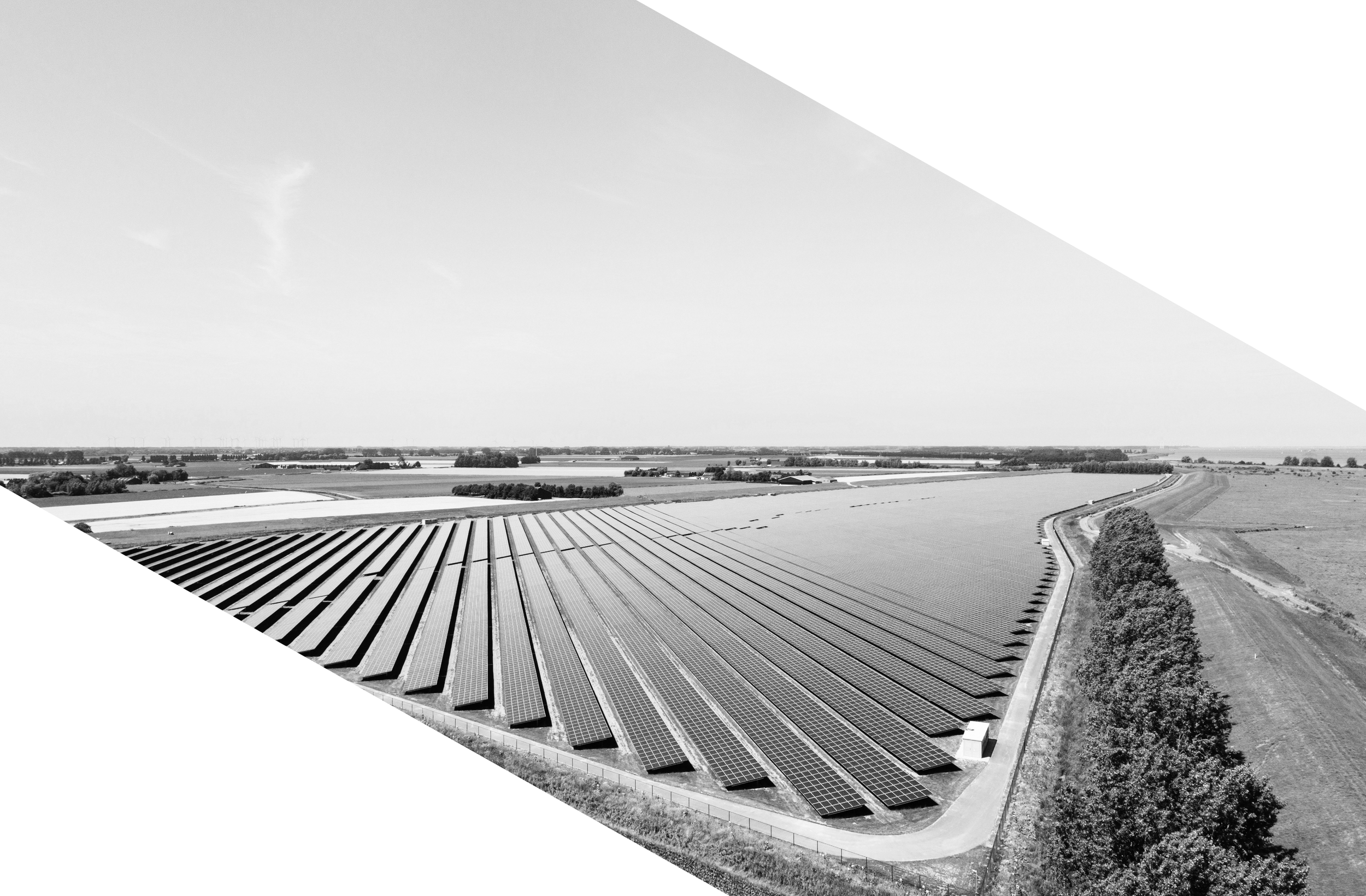
Private investors and institutional investors looking to invest in photovoltaic projects gain access to a 20- to 40-year source of cash flow backed by physical collateral. As an asset class, solar energy benefits from stable regulatory support and long-term growth in electricity demand. The opportunity to become a direct owner of a photovoltaic system as an investor is one of the key advantages over fund investments: With the optional purchase of the system, the photovoltaic system belongs entirely to the investor. Electricity revenues are largely inflation-adjusted—tangible assets such as solar systems cushion losses in purchasing power.
3. Medium-sized companies and holding companies
Corporations with excess liquidity invest in photovoltaic systems as long-term assets. The GmbH structure excludes the IAB (Section 7g applies only to sole proprietorships and partnerships); the straight-line depreciation of 5% over 20 years (BMF depreciation table) remains available as a tax benefit. Additional advantages: physical collateral and predictable cash flow over the entire lifespan of the photovoltaic systems.
4. Those who are better off choosing a different path
Investors with a time horizon of less than five years, a high need for liquidity, or who are unwilling to deal with tax issues are better served by regulated funds or ETF savings plans. A detailed breakdown: The difference between direct investment, funds, and crowd investing.
How does your investment process work, step by step?
It typically takes one year from initial contact to commissioning, depending on the type of project, grid connection capacity, and the status of approvals. Logic Energy handles every step of the project; the investor signs two documents (the contract and the easement agreement) and receives monthly revenue reports starting on the first day after commissioning.
Anyone looking to invest in a solar power system benefits from a standardized process: even without prior industry knowledge, you can count on reliability and transparency. After the initial consultation, you don’t have to do anything; all operational tasks are handled by the technical operator, the Helm Group.
Step 1 — Initial consultation and investor profile
During a no-obligation consultation, we will discuss your investment goals, investment amount, tax situation, and time horizon. This information will be used to create a brief profile to guide our project selection.
Step 2 — Project Proposal
You will receive a detailed proposal for a solar power system: location, kWp capacity, yield forecast, revenue model (EEG or direct sales), financing plan, and yield range. Basis: a thorough site analysis of the planned solar power system—solar radiation, suitability of the site, and grid connection capacity. For rooftop projects, the available roof area is also subjected to a structural analysis.
Step 3 — Notary, easement, utility connection
The contract will be notarized. The easement and the grid operator’s commitment to provide a grid connection will be documented simultaneously—approval will be secured before construction begins. The Helm Group is the direct contracting party, not an intermediary.
Step 4 — Construction and Commissioning
Logic Glas GmbH acts as a general contractor—with fixed milestones and a fixed price. We develop solar parks as standalone projects on open land and rooftop photovoltaic systems on available roof space. Whether on a large industrial roof or open land, N-type modules ensure the longevity of the photovoltaic system throughout its entire lifespan. For industrial roofs with limited load-bearing capacity: our proprietary roof bridging system. After commissioning, you become the official owner of your share—the Helm Group remains the operational operator.
Step 5 — Day-to-Day Operations and Profit Reports
Once the photovoltaic system is up and running, you will receive monthly yield reports detailing actual production, payment statements, and the performance ratio. Operations, O&M, administrative processing, and photovoltaic insurance are handled by the Helm Group as the technical operator—allowing you to passively share in the system’s returns. Detailed description: The investor model in detail.
| Step | Duration (early) | Duration (late) | Who does what? |
|---|---|---|---|
| 1. Initial Consultation & Assessment | 1–2 weeks | 1–2 weeks | You: Submit your profile Logic Energy: Review eligibility, create a brief profile |
| 2. Project Proposal & Review | 2–4 weeks | 2–4 weeks | You: Review the proposal, clarify any questions Logic Energy: Location, yield forecast, financing plan |
| 3. Placement Phase | 3–6 months | a few weeks | She: passive Logic Energy: Bringing together co-investors for the overall project |
| 4. Notary, easement, utility connection | 4–6 weeks | 4–6 weeks | You: Sign the contract ; Logic Energy: Notary appointment, easement, NAZ |
| 5. Construction & Commissioning | 3–5 months | 3–5 months | She: passive Logic Energy: General contractor Logic Glas GmbH, acceptance |
| 6. Ongoing Operations & Earnings Reports | 20–40 years old | 20–40 years old | You: Receive performance reports Logic Energy: O&M, insurance, billing |
| Total to Cash Flow | about 12 months | about 6 months | — |
| Source: Helm Group, average based on portfolio projects from 2023–2024. Duration varies depending on the grid operator, the permitting process, and the point at which you join the project. Early = You are one of the first investors; the project is still being finalized. Late = You are filling the last open slot in a project that is about to begin construction. | |||
How much does it cost to get started, and what kind of return can I realistically expect?
Investments start at 100,000 euros in equity. The total return ranges between 6 and 12 percent per year (Source: Helm Group, portfolio data 2024): 6–10 percent as a baseline excluding tax effects, up to 10–12 percent for investors who can fully utilize the tax benefits under Section 7g of the German Income Tax Act (IAB and special depreciation).
The output of a photovoltaic system is determined by four factors: installed capacity (kWp), specific electricity yield (kWh/kWp per year), the feed-in tariff model, and tax incentives. Based on internal data, the Helm Group conservatively estimates 900–1,100 kWh/kWp per year (Fraunhofer ISE 2024) and factors degradation, O&M, and insurance into the net yield. This provides reliable data for calculations to anyone wishing to invest in photovoltaics—each investment is reviewed individually.
Typical project sizes
From shares in the inverters of a 750-kWp commercial rooftop system on a sufficiently large roof area (below the tender threshold) to a solar park with 1–5 MWp of ground-mounted capacity. Investors looking to invest in photovoltaics typically combine multiple solar systems into a diversified investment portfolio. Technical Details: Ground-Mounted Solar Park. Investors combine shares in multiple solar parks to spread risk geographically—a way to stabilize the portfolio.
Open spaces are cheaper, but rooftops are often more cost-effective — and why quality comes at a price
Ground-mounted photovoltaic systems are generally slightly cheaper per kWp than rooftop systems: standardized mounting structures, larger quantities, no structural analysis required, and no risk of roof penetration. However, there are structural disadvantages: longer permitting processes, lease costs for the land, lower EEG feed-in tariffs in Segment 1 (5.79 ct/kWh instead of up to 10.00 ct/kWh for rooftop systems over 1 MWp), mandatory tendering for systems over 1 MWp, and greater dependence on grid connection availability. Roof-mounted systems, on the other hand, benefit from higher feed-in tariffs, faster implementation, and no lease costs—the higher investment costs per kWp often pay for themselves more effectively over the system’s lifetime.
At first glance, Logic Energy projects may seem more expensive than offerings from pure project developers or crowd-investing platforms. The reason: With Logic Energy, everything comes from a single source —site acquisition, permitting, grid connection, general contractor construction (Logic Glas GmbH), O&M operations, and commercial management through the Helm Group. The contractual partner is mediplan Helm e.K., with personal owner liability under Sections 1–6, 17, 19 of the German Commercial Code (HGB)—an owner is personally liable for long-term operation. In addition: N-type modules for maximum durability, our own roof bridging system for industrial roofs with limited load-bearing capacity, photovoltaic insurance, monthly yield reports, and a fixed construction price with no risk of cost overruns. This level of integration costs more than the price of the cheapest provider—but it also reduces the risk of failure over a 20- to 40-year term and makes the return calculable over the entire lifecycle.
Utility bills and ongoing expenses
One-time costs: Notary and land registry fees (1–2% of the investment amount), easements if applicable. Recurring costs: Lease, O&M, insurance, management fees — already factored into the price. The 6–10% base rate and up to 10–12% with tax incentives are net figures after expenses, before income tax.
Market benchmark for commercial and solar park projects: For large-scale photovoltaic systems, investments should be below approximately €2,000/kWp without battery storage and below approximately €2,700/kWp with battery storage to ensure that profitability remains within the target range (market benchmarks for 2026, commercial/MW segment). Specific project calculations are performed individually for each location. Advantages: a long technical service life and low operating costs stabilize returns over the project’s lifecycle.
with §7g tax incentives
30-Year Average
; net rent in the city
's Standard Interest Rate on Call Money
Which three revenue streams drive your earnings?
Revenues come from three complementary sources: the EEG feed-in tariff or the auction award (up to a maximum of 5.79 ct/kWh in the first segment, bid deadline March 1, 2026, Federal Network Agency), from direct marketing with a market premium on the spot market, and—when combined with battery storage—from optimization through arbitrage, PPAs, or system services.
The majority of the systems feed electricity into the public grid; self-consumption plays only a minor role in the investment model—photovoltaic investments with Logic Energy are optimized for grid feed-in. Revenue is therefore decoupled from third-party electricity consumption.
EEG Feed-in Tariff and Tender Award
For photovoltaic systems up to 1,000 kWp (rooftop/ground-mounted), the statutory fixed feed-in tariff under the EEG 2023 applies. Above that: BNetzA tender. Maximum rate for ground-mounted systems as of March 1, 2026: 5.79 ct/kWh; maximum rate for rooftop systems >1 MWp in 2026: 10.00 ct/kWh (pv magazine, December 16, 2025). The state-guaranteed feed-in tariff for solar energy ensures 20 years of planning security —one of the clear advantages of investing in renewable energy. System: EEG Tariff 2026.
Direct marketing and market premium
Mandatory by law for systems of 100 kWp or more (Section 21b of the EEG 2023). Revenue: Monthly market value of solar power (EPEX Spot) + market premium based on the applicable value − marketing fee. Market conditions: Direct marketing of PV electricity in 2026.
PPA and battery storage
Long-term power purchase agreements (PPAs) stabilize revenue beyond the statutory periods. Battery energy storage systems (BESS) generate additional revenue from intraday arbitrage, balancing power, and, starting in January 2026, from instantaneous reserve (fixed price of up to €888.50/MWh/year premium; netztransparenz.de, BNetzA BK6-23-010). The Solar Peak Act makes storage in solar parks even more relevant because EEG remuneration is not paid when electricity prices are negative. Revenue growth: +1–2 percentage points annually. Details: PV battery storage and PV with battery storage: returns, costs, co-location.
What are the tax implications of this investment?
Three key tax benefits are available to PV owners: the investment deduction under Section 7g(1) of the German Income Tax Act (EStG), the special depreciation under Section 7g(5) of the EStG, and straight-line depreciation over 20 years. In combination with the declining-balance depreciation under Section 7(2) of the German Income Tax Act (EStG), the tax savings for a €100,000 investment and a marginal tax rate of 42% can reach approximately €32,550 in the first two years (internal sample calculation by the Helm Group).
For the complete calculations, assumptions, and edge cases, please refer to the detailed article: Saving on Taxes with Photovoltaics in 2026 — IAB, Special Depreciation, and Declining-Balance Depreciation. Note: This information does not constitute tax advice. Proceedings are currently underway at the Federal Fiscal Court (BFH) regarding the scope of the IAB (III R 39/25, III B 24/24) — individual application must be handled by a tax advisor.
What risks are you taking—and how does Logic Energy mitigate them?
Photovoltaic investments are business ventures that involve four key risks: market risk (spot market and PPA prices), regulatory risk (mandatory CfDs for new contracts starting July 17, 2027, under EU Regulation 2024/1747), counterparty risk, and liquidity risk. Logic Energy mitigates these risks through the personal liability of the sole proprietor, standardized contracts, grandfathering provisions for awarded projects, and a clear cost structure from a single source.
Market risk
Anyone investing in photovoltaics for the long term should note the following: Once the 20-year EEG feed-in tariff expires, the owner of the photovoltaic system will bear the full market price. 2025: 573 hours of negative prices on the spot market (SMARD/BNetzA), and the trend is rising. Countermeasures: Battery storage, long-term PPAs, and geographic diversification across multiple solar installations and solar parks at various locations in Germany.
Regulatory risk
EEG subsidy approval expires on December 31, 2026. Effective July 17, 2027: new price support contracts will be bilateral contracts for difference (CfD, Art. 19d of Regulation (EU) 2024/1747). Existing plants with a subsidy will retain current terms —the opportunity to invest under these rules in 2026 is time-limited. Details: CfD requirement effective 2027.
Counterparty risk
Contractual partner and operator of the photovoltaic system: mediplan Helm e.K. — a registered sole proprietorship with personal, unlimited liability of the owner. Structurally stronger than a GmbH (Section 13(2) of the German Limited Liability Companies Act). As a long-standing operator, the Helm Group has been active in the market for over 40 years. Legal basis: §§ 1–6, 17, 19 HGB — HGB §27.
Liquidity risk
Photovoltaic investments are illiquid long-term investments. Resale is possible, but only through individual agreements—there is no regulated secondary market. If you need access to capital within 10 years, a more liquid investment option is more suitable.
| Risk | probability | Amount of damages | Countermeasure: Logic Energy |
|---|---|---|---|
| Spot Market Price Volatility | medium–highrising after 2045 | medium | Long-term PPAs, battery storage, portfolio diversification |
| Regulatory (CfD effective July 17, 2027) | highDecided under EU law | minimalfor existing projects | Grandfathering for projects awarded before the deadline |
| Counterparty (contracting party) | low | highin the event of a claim | Personal liability of the owner of mediplan Helm e.K. (Section 27 of the German Commercial Code) |
| Power Connection / Technical Specifications | low | medium | Grid Connection Confirmation Prior to Contract Signing, O&M Logic Glas GmbH |
| Liquidity (Resale) | highilliquid | medium | Transparent disclosure; no sales to unsuitable target groups |
| Tax (Federal Fiscal Court case law) | lowfor the investor model | low | Eigenverbrauch <10 %, laufende Rechtsprechungs-Beobachtung |
| Source: Helm Group, internal risk assessment as of April 22, 2026. Risks in specific cases should be evaluated individually with a tax advisor and investment expert. | |||
How does Logic Energy differ from mutual funds and crowd investing?
Unlike with closed-end PV funds or crowdinvesting platforms, Logic Energy establishes a direct contractual relationship with the personally liable mediplan Helm e.K. — no prospectus under the German Investment Act (VermAnlG), no front-end loads, and no intermediary issuer. Instead: a direct investment in tangible assets as a long-term investment with a share in inverter revenue and full transparency regarding operations.
The Logic Energy model does not constitute a public offering within the meaning of the German Investment Act (VermAnlG) —the investor acquires an individual stake in a photovoltaic system, and the Helm Group does not issue any investment products. Advantage: a streamlined model, no prospectus costs, and direct communication between the owner and management. Distinction: BaFin: Financial investment — Consumer information.
| Feature | Logic Energy (Direct investment) |
Closed-end PV fund | Crowdfunding platform |
|---|---|---|---|
| Minimum bet | 100.000 € | often €10,000–25,000 | often €100–500 |
| Contracting party | mediplan Helm e.K. –personal liability of the owner | Most fund companies are limited partnerships (KG) or limited liability companies (GmbH) | Platform-IssuerSubordinated Loan |
| Return (historical) | 6–12% per year | 4–6% per year, after expenses | 3–7%interest rate risk of total loss |
| Front-end load / Soft costs | none | often 8–15% of the subscription amount | low, but platform fees |
| Access to tangible assets | direct contribution to inverter output | indirectly through fund assets | No access to tangible assetsLaw of Obligations |
| Tax (IAB §7g) | availableEntrepreneurs/private investors | often unusable | unavailable |
| Duration | 20–40 years old | 8–15yearsFund term | 3–10 years |
| Regulation | No VermAnlG prospectus required | KAGB or VermAnlG | VermAnlG Information Sheet |
| Source: Helm Group, based on publicly available market data and standard contract terms. Details: Differences between direct investment, funds, and crowd investing. | |||
How do you get started as a solar investor?
Interested in becoming a solar investor? The fastest way to get started is with a 30-minute, no-obligation initial consultation, during which Logic Energy will assess your investor profile and prepare a concrete project proposal within two to four weeks. Please bring your current profit figures and investment goals with you—this will allow us to reliably quantify the tax benefits under Section 7g of the German Income Tax Act (EStG).
Conclusion: Getting Started as a Solar Investor in 2026
Becoming a PV investor in 2026 means: predictable cash flows under a 20-year EEG regime, measurable tax benefits under Section 7g of the German Income Tax Act (EStG), and a narrow window of opportunity before the CfD requirement takes effect on July 17, 2027. Those looking to invest in photovoltaics as a financial investment can expect a base annual return of 6–10% through the Helm Group, with tax benefits under Section 7g of the German Income Tax Act (EStG) increasing this to 10–12%, a direct contractual relationship with mediplan Helm e.K., and an entry threshold starting at €100,000. Solar energy remains in demand as an asset class—photovoltaic systems remain the cornerstone of the energy transition and renewable energy, offering investors a concrete opportunity to benefit from the expansion of renewable energy sources such as photovoltaics in Germany.
Next steps: Define your profile, request a quote, and consult with your tax advisor.
Market Overview: Photovoltaic Investment 2026.
Revenue Scenarios: Solar System Return on Investment in 2026.
Process: Here's how the investor model works.
Get started right away: a no-obligation initial consultation.
Request your no-obligation initial consultation!
FAQ
-
Minimum investment of €100,000 in equity. Those wishing to invest in solar power with less capital can find lower entry thresholds through regulated funds. Smaller amounts are not accepted—the associated costs (notary fees, easement registration, and personalized support) are not cost-effective for such amounts. Larger investment amounts allow for diversification across multiple solar power investments.
-
Standard option: long-term profit-sharing in one or more inverters of a solar power system. Optional: purchase of an entire solar power system as the sole owner. Both options are notarized—ensuring your investment is legally secure.
-
Initial term of 20 years (EEG feed-in tariff period), with an option to extend up to 40 years — modern photovoltaic modules are technically capable of generating power for 30+ years (Fraunhofer ISE).
-
6–10% annually, before taxes. Investors who are eligible for IAB and special depreciation under Section 7g of the German Income Tax Act (EStG) can achieve returns of up to 10–12% annually (Helm Group, portfolio data for 2024).
-
A government-guaranteed revenue stream for the 20-year EEG period. After that, the owner bears the market price risk. Countermeasures: battery storage, long-term PPAs, diversification across multiple solar installations.
-
Yes. The investment deduction, special depreciation, and straight-line depreciation are determined on a case-by-case basis. Logic Energy provides the technical and contractual data; the tax assessment—whether and how you invest—is the responsibility of your tax advisor.
-
Those who wish to invest directly in photovoltaic projects enter into a contract with Logic Energy through the personally liable mediplan Helm e.K. — with no front-end load, no issuer, and no prospectus requirement under the German Investment Act (VermAnlG). This approach is more streamlined, transparent, and more tax-efficient for sole proprietors than a closed-end fund, in which investors invest indirectly.
Important Note Regarding Investment and Tax Information
The information on this page is for general informational purposes only and does not constitute investment, tax, or legal advice. The return figures are illustrative calculations based on actual projects undertaken by the Helm Group (as of April 22, 2026) and are not a guarantee of future results. Every investment decision should be reviewed individually with a tax advisor and an independent investment expert. Tax regulations: Section 7g of the Income Tax Act (EStG) as amended by the Growth Opportunities Act of March 27, 2024 (Federal Law Gazette I No. 108), BMF depreciation table. Proceedings are pending before the Federal Fiscal Court (BFH) regarding the IAB scope for photovoltaic systems (BFH III R 39/25 Appeal against Hessian Fiscal Court 22 Oct. 2025 — 10 K 162/24; BFH III B 24/24 AdV decision of 15 Oct. 2024) — the legal situation may change.
The Logic Energy investor model is a direct ownership of a PV system with a share in inverter revenue or a system purchase —it is not an investment within the meaning of the German Investment Act (VermAnlG), not a financial investment within the meaning of the German Securities Trading Act (WpHG), and does not constitute investment advice under the WpHG. Contractual partner: mediplan Helm e.K., with personal liability of the owner pursuant to Sections 1–6, 17, 19 of the German Commercial Code (HGB). All information regarding returns, terms, and costs is based on portfolio data and contractual standards of the Helm Group (as of April 22, 2026) and may vary depending on the specific project.
Further information on PV investment
In-depth information on the Helm Group’s investor model and photovoltaic investments for anyone interested in investing in photovoltaics—market, products, and regulations.
Pillar and cluster content related to the investment:
Photovoltaic Investment 2026 — Market Overview and Comparison of Investment Types
How the investor model works — From inquiry to operation
Solar System Return on Investment in 2026: Three Scenarios — Sample Calculations Based on System Size and Tax Profile
The Difference Between Direct Investment, Funds, and Crowdinvesting — Legal and Tax Distinctions
Calculation example: IAB, special depreciation, straight-line depreciation — tax leverage under Section 7g of the Income Tax Act (EStG) over 5 years
Mandatory CfDs Starting in 2027 — What the EU Reform Means for New Projects
Regulation and the Market:
EEG Feed-in Tariff 2026 — Feed-in Tariff, Caps, Degression
Direct Sales of PV Electricity in 2026 — Market Premiums and Monthly Market Values
The Solar Peak Act and Negative Electricity Prices — EEG Feed-in Tariffs During Periods of Negative Prices
Product pages:
Ground-Mounted Solar Farm — Technical Design for MW-Scale Plants
PV Battery Storage for Businesses and Investors — LFP Technology, Design, Co-location
Solar PV with Battery Storage: Return on Investment, Costs, Co-location — The Economic Viability of the Combination
External sources and legal basis:
§7g of the Income Tax Act (EStG ) — IAB and Special Depreciation
HGB §27 — Personal Liability of the Registered Merchant
BaFin: Investments — Investment Products, Shadow Market, Investment Products Act (VermAnlG)
External sources and legal basis:
§7g EStG (gesetze-im-internet.de) — Legal basis for the investment deduction and special depreciation
HGB §27 (gesetze-im-internet.de) — Personal liability of the registered merchant
BaFin: Investment — Regulatory Classification of Investments, the Gray Market, and Prospectus Requirements Under the German Investment Act (VermAnlG)
Federal Network Agency — Solar Power Plant Tenders, Segment 1 — Highest bid of 5.79 ct/kWh as of the bidding deadline of March 1, 2026
Fraunhofer ISE — Levelized Cost of Electricity for Renewable Energies in 2024 — Basis for the study on specific electricity yields of 900–1,100 kWh/kWp per year
pv magazine (December 16, 2025) — Maximum feed-in tariff for rooftop systems >1 MWp in 2026: 10.00 ct/kWh (Federal Network Agency ruling AZ 4.08.01.01/1#64)
SMARD — Electricity Market Data (Federal Network Agency) — 573 hours of negative prices on the spot market in 2025
netztransparenz.de — Instantaneous Reserve — BNetzA Decision BK6-23-010, Fixed Price up to €888.50/MWs/year Premium
Growth Opportunities Act of March 27, 2024 (Federal Law Gazette I No. 108) — Basis for the current version of Section 7g of the Income Tax Act
BFH III R 39/25 — Hess. FG 10 K 162/24 — Ongoing appeal proceedings regarding the IABfor residential photovoltaic systems with predominantly self-consumption
BFH III B 24/24 — AdV Decision of October 15, 2024 — Revocation of IABfollowing the introductionof the tax exemption under § 3 No. 72 of the Income Tax Act (Appeal against FG Cologne 7 V 10/24)
Regulation (EU)2024/1747 — Electricity Market Design Reform — Art. 19d: CfD requirementfor new price support contracts effective July 17, 2027
Internal rates of return: 6–10% baseline and up to 10–12% p.a. with tax optimization, and average duration of portfolio projects: 2023–2024 (not public)