Photovoltaic Systems in 2026: Types, Applications, and Cost-Effectiveness for Investors, Businesses, and Farmers
In 2026, photovoltaic systems will be a key component of sustainable energy supply and provide economic planning certainty for businesses, the agricultural sector, and the portfolios of institutional investors. This guide is intended for investors with a minimum investment of €100,000, commercial enterprises with high electricity consumption, as well as farmers and landowners. In 2026, photovoltaic systems will fall into four main categories—rooftop systems, ground-mounted systems, agri-PV, and battery storage—which differ significantly in terms of land requirements, economic viability, and regulatory frameworks. Logic Energy and mediplan Helm e.K. will guide you through the entire value chain: land acquisition, project planning, financing, construction, and operation—all from a single source.
Table of Contents
- Market and Classification 2026
- What are photovoltaic systems?
- What types of solar power systems are there?
- Residential and Commercial Solar Roof Systems
- Ground-mounted solar systems and solar farms
- Agri-PV: Dual Use
- Battery storage as a system component
- Which investment is right for whom?
- Cost-Effectiveness of Photovoltaic Systems
- Legal Framework: EEG 2023, Taxes
- Marketing Models: Grid Connection, Direct Sales, PPA
- What Sets Logic Energy Apart
- FAQ
- References
Market and Classification 2026
By 2026, photovoltaic systems will no longer be a niche topic, but rather a mature asset class and the central tool of the energy transition. For businesses, farmers, and investors, photovoltaic systems combine economic and environmental benefits in a single investment: predictable electricity generation costs over 20+ years, independence from volatile energy prices on the electricity market, and a verifiable contribution to the decarbonization of their own operations. In 2025, photovoltaics surpassed lignite and natural gas in the German electricity mix for the first time, generating approximately 87 TWh of electricity—details can be found in the cluster “Photovoltaics Surpasses Lignite and Natural Gas in 2025.”
By the end of 2025, approximately 119 GWp had been installed across some 5.5 million solar systems, which are making a growing contribution to decentralized electricity generation and supply (Fraunhofer ISE, Current Facts, March 2026). By 2026, the bottleneck for new PV systems will no longer lie in technology or costs—it will lie in grid connection, land availability, and the choice of the right marketing model. On sunny summer days, solar power covers more than half of Germany’s grid load during the midday hours. It is precisely these three bottlenecks—grid, land, and marketing—that determine which type of PV system is viable for which profile.
Which solar power system is right for you?
During a no-obligation initial consultation, we’ll determine which type of investment best suits your capital, space, and consumption profile—structured according to capital investment, space, and time horizon.
What are photovoltaic systems—and how do they differ from solar thermal systems?
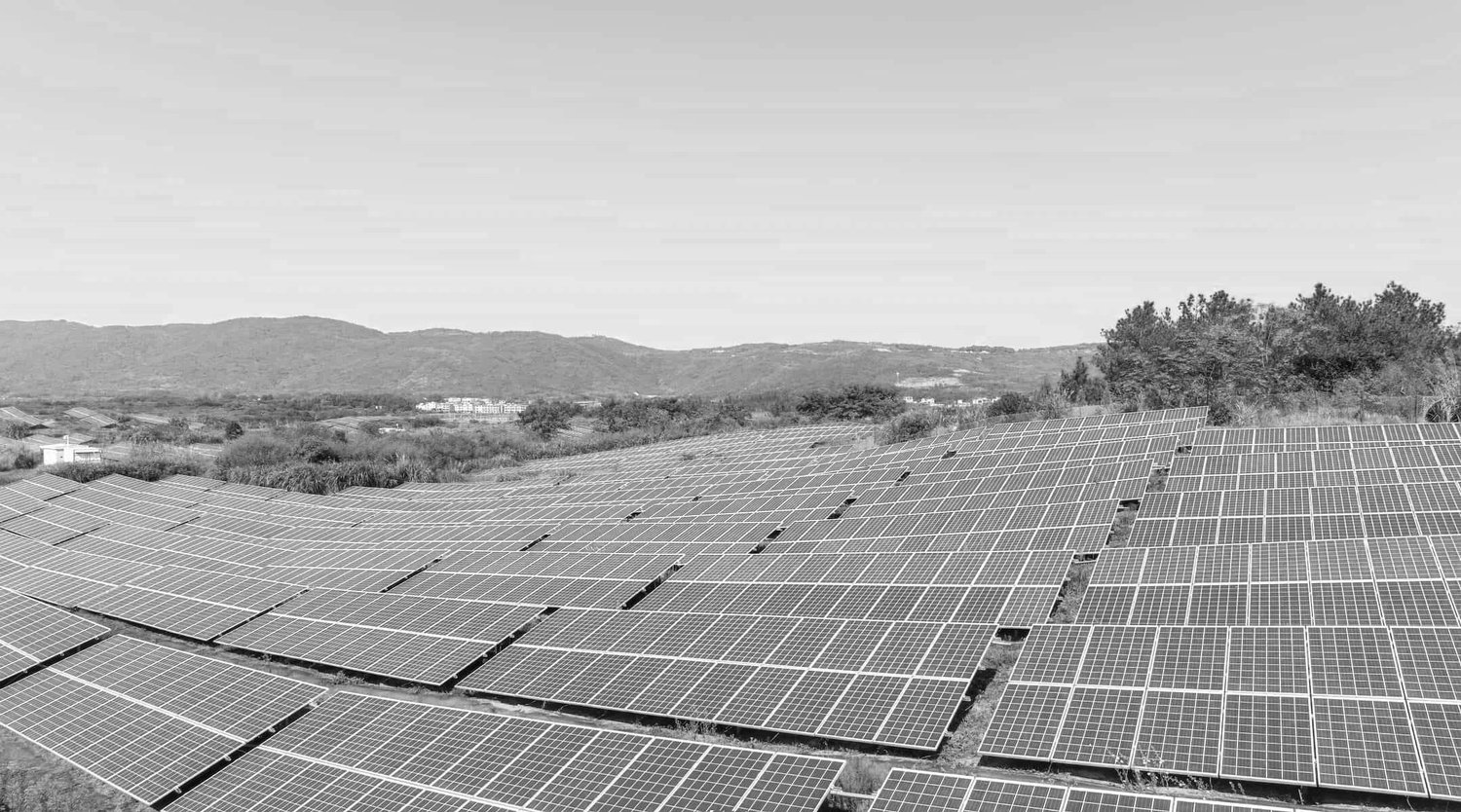
A photovoltaic system—also known as a solar power system—is a system consisting of solar modules (PV modules), an inverter, a mounting structure, and a grid connection that converts sunlight, i.e., solar energy, directly into electrical energy, thereby making solar energy usable. Solar thermal systems, on the other hand, generate heat. A photovoltaic system typically consists of solar modules, inverters, and optional energy storage systems; the generation of solar power produces no CO2 emissions during operation. In Germany, photovoltaic systems produced approximately 87 TWh of electricity in 2025 (Fraunhofer ISE, Energy-Charts, January 2026), thereby covering about one-fifth of Germany’s net electricity generation (BSW-Solar, August 20, 2026).
An Overview of the Components and How a PV System Works
Every photovoltaic system consists of the same functional components, regardless of its size or location. The solar modules (also known as PV modules) use the solar cells inside them to convert photons from sunlight into electrical energy through the photovoltaic effect. A module’s efficiency describes the proportion of solar radiation that is converted into usable electricity. The inverter—available in string, micro, or hybrid variants—converts the direct current from the modules into grid-compatible alternating current and optimizes energy yield via MPP trackers.
The mounting system, consisting of a substructure and mounting framework, supports the modules on roofs, in open fields, or in agri-PV structures. The grid connection—including the meter and feed-in management system—establishes the connection to the public power grid, through which the generated electricity is fed into the grid, and is registered in the Federal Network Agency’s market master data registry. The system voltage of modern solar modules ranges from 1,000 to 1,500 volts, depending on the size of the system. Optionally, a battery storage system can be added to the system to decouple generation from consumption over time.
Comparing Solar Panels: Monocrystalline, Polycrystalline, and Thin-Film
At the heart of every PV system are the solar cells. Three silicon-based families dominate the market. Monocrystalline solar modules consist of high-purity silicon in a single crystal lattice and will achieve efficiencies of 20–24% in mass-market applications by 2026, while premium variants featuring TOPCon or HJT cell technology will reach up to 24.8% (Fraunhofer ISE Photovoltaics Report, 2025/2026)—they are the undisputed standard. Polycrystalline modules achieve efficiency levels of 15–18%, but by 2026 they have virtually disappeared from the market. Thin-film modules (CdTe, CIGS) achieve 8–20% efficiency and are lightweight and flexible—ideal for building-integrated applications. Bifacial modules deliver 5–15% higher yield in Germany (Fraunhofer ISE). Annual degradation is 0.4–0.5%; performance warranties last 25 to 30 years.
The rated output of a PV system is specified in kilowatt-peak (kWp). In Germany, one kWp produces an annual average of about 1,000 kWh, and up to 1,160 kWh in the south (Fraunhofer ISE, March 2026). How much electricity a specific system generates depends on its location, orientation, and shading; a roof pitch of about 30 degrees facing south is considered optimal. Questions regarding roof orientation, pitch, and shading are addressed on the sub-pillar page “How to Plan a Rooftop System for Your Business.”
PV vs. Solar Thermal — A World of Difference
Photovoltaic systems generate electricity, while solar thermal systems generate heat. For investors and commercial entities, photovoltaics is almost always the more relevant option because electricity is marketable, grid-connected, and offers greater tax flexibility; solar thermal systems play a role in these target groups only as a supplement for businesses with high process heat requirements.
What types of solar power systems are there? The four main categories
In a B2B context, four types of systems are relevant: rooftop systems, ground-mounted systems, agri-PV, and battery storage as a complementary system component. As of the end of 2025, over 5.5 million photovoltaic systems were registered in Germany (Market Master Data Registry, January 2026), with a cumulative capacity of approximately 119 GWp. Roof-mounted systems are installed on or within building roofs (on-roof/in-roof) and are designed for self-consumption or partial feed-in. Ground-mounted systems are large-scale solar parks on open land and dominate direct marketing. Agri-PV combines primary agricultural use with electricity generation on the same land (DIN SPEC 91434). Battery storage systems are not a separate type of system but rather a system component.
From a technical standpoint, PV systems can be divided into two types: grid-connected systems are directly connected to the public power grid (the norm in the B2B segment) and feed excess electricity into it. Off-grid systems operate independently of the power grid. Other types of photovoltaic systems have so far played a niche role: floating PV on bodies of water, BIPV (building-integrated PV facades), and PV carports. Small and mini solar systems, such as balcony power plants for private households, play no role in the commercial B2B context, however.
| System type | Typical size | Space requirements | LCOE range | Primary target audience | In-depth study |
|---|---|---|---|---|---|
| Roof-mounted system | 30–1,000 kWp | 5–8 m²/kWp | 5.7–12.0 cents per kWh | Business, Investor | Roof-Mounted System for Your Business |
| Ground-mounted solar power plant | 1–250 MWp | 1.0–1.5 ha/MWp | 4.1–6.9 cents per kWh | Investor, property owner | Open-Space Solar Farms |
| Agri-PV | 1–10 MWp | 1.2–2.0 ha/MWp | 7–12 cents per kWh | Farmer, Investor | Agri-PV Explained |
| Battery storage | 50 kWh–25 MWh | system-integrated | in addition | Business, Investor | Storage + PV |
| Source: Fraunhofer ISE, Levelized Cost of Electricity for Renewable Energies, July 2024 · Logic Energy Portfolio Data 2025 | |||||
Residential and Commercial Solar Roof Systems — When Are They Worth It?
Roof-mounted PV systems utilize existing building surfaces and achieve self-consumption rates of up to 70–90% for commercial operations: Electricity generated on-site replaces expensive grid power and covers a large portion of the business’s electricity needs. The specific investment costs range from €900 to €1,600 per kWp (Fraunhofer ISE, July 2024), and the space requirement is 5–8 m² per kWp. Manufacturing facilities, logistics warehouses, and retail and administrative buildings have load and generation profiles that align well—electricity demand is highest during the day, and the sun shines during the day.
For businesses, there are three compelling arguments: Cheaper self-generated electricity reduces overhead costs and supports ESG criteria. Fixed production costs that can be planned decades in advance make cost calculations resilient to energy price fluctuations. And large roof areas are transformed from a cost factor into productive capital through PV installation. Roofs with limited load-bearing capacity were long considered unsuitable for installation; Logic Energy has developed its own roof bridging system that utilizes the load-bearing supports and bridges the gaps—making even roofs that other providers reject usable.
Systems of 100 kWp or more are subject to the direct sales requirement; with Solar Package I (May 2024), an alternative option of free purchase was introduced for the segment up to 200 kWp. The sub-pillar page addresses in-depth questions regarding structural analysis, roof orientation, self-consumption optimization, €/kWp benchmarks, and solar mandates in the federal states: How to Plan a Rooftop System for Your Business.
Ground-Mounted Systems and Solar Farms — Scaling for Investors and Landowners
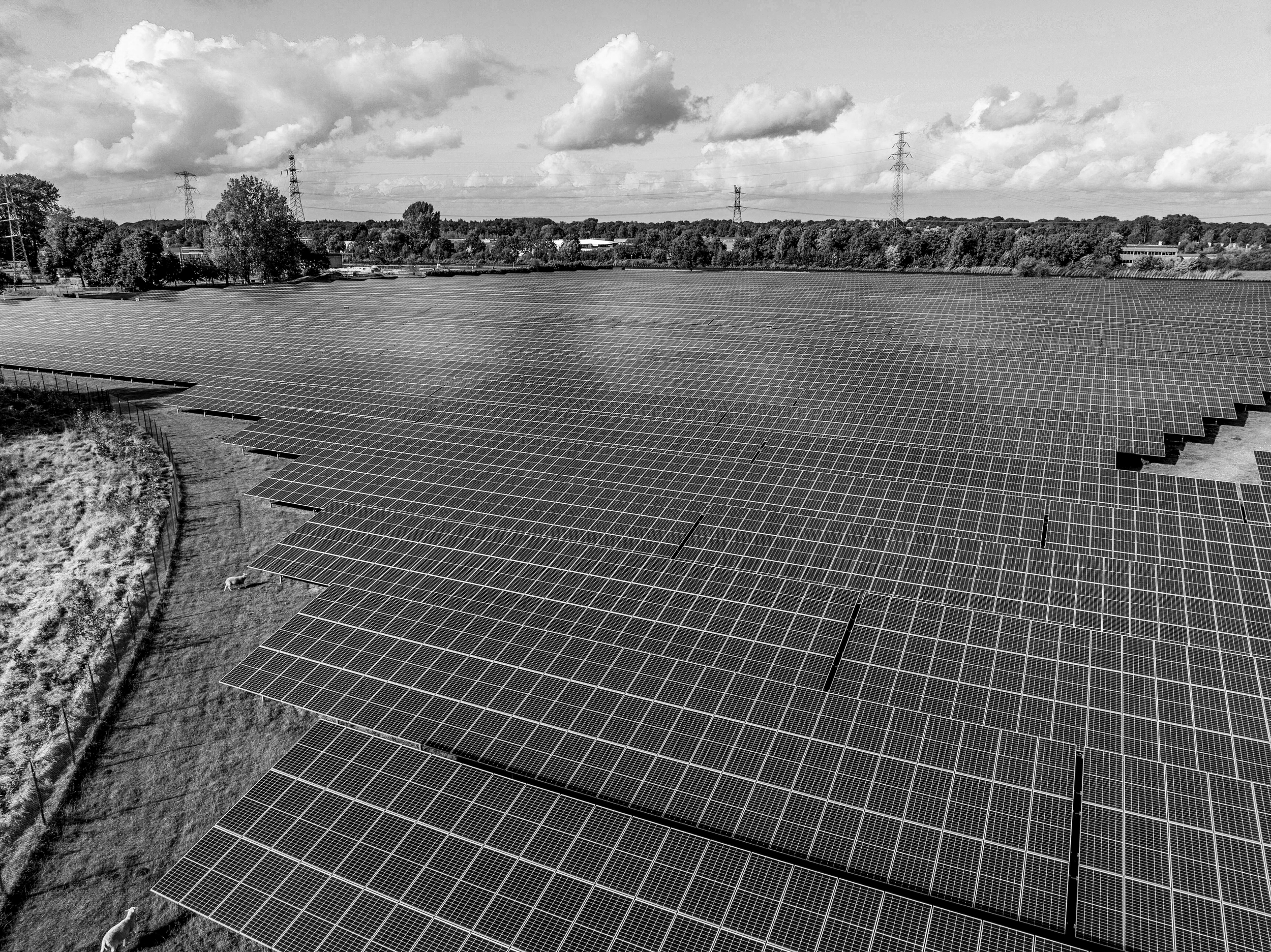
Ground-mounted solar farms are solar parks located in open fields, typically ranging from 1 to 250 MWp and requiring 1.0 to 1.5 hectares of land per megawatt-peak. They achieve the lowest levelized cost of electricity of all plant types: 4.1–6.9 ct/kWh (Fraunhofer ISE, July 2024). The average winning bid in the BNetzA tender from December 2025 was approximately 5.00 ct/kWh. Their economic viability stems from economies of scale: low specific investment costs of 700–900 €/kWp, direct sales under the market premium model, and predictable revenue streams over 20+ years.
Typical sites include agriculturally disadvantaged areas as defined in Section 37 of the EEG 2023, converted land, landfills, and 500-meter strips along highways and railways. In practice, site acquisition is the critical bottleneck. Landowners are involved through lease models or profit-sharing arrangements; municipal financial participation under Section 6 of the EEG 2023 is virtually standard practice in the industry. mediplan Helm e.K. employs an active, systematic approach to site search, which is rare in the market. In-depth technical topics such as mounting height, bifacial panels, row spacing, grid connection concepts, and tendering mechanisms are covered on the sub-pillar page: How Industrial Solar Parks on Open Land Work.
Agri-PV: Dual Use of Agricultural Land and Solar Power
Agri-PV combines primary agricultural use with electricity generation on the same land. DIN SPEC 91434 (as of May 2021) requires that at least 66% of the reference yield come from agricultural use. The Federal Network Agency’s December 2025 tender awarded 30 contracts totaling approximately 204 MWp, with a maximum bid price of 9.5 ct/kWh. Two categories are distinguished: elevated systems above orchards, vineyards, or cropland, and ground-level systems with vertical module arrangements between crops. The land remains suitable for agricultural use and is eligible for EU direct payments.
For farmers, this creates a second, stable source of income; for investors, it opens up a segment with its own, higher-paying tender process. Typical project sizes range from 1 to 10 MWp; the land requirement, at 1.2–2.0 ha/MWp, is slightly higher than for ground-mounted systems, but this is offset by the parallel agricultural yield. The technical requirements—light transmission, module geometry, and vehicle accessibility—are more demanding than those for traditional ground-mounted PV. Details on crop types, DIN-SPEC requirements, permitting practices, and subsidy structures are covered on the sub-pillar page: Agri-PV: Agriculture and Solar Power on the Same Land.
Battery Storage: When It Makes Solar Power Systems More Cost-Effective
Battery storage decouples generation from consumption over time and opens up additional revenue streams in the electricity market. By the end of 2025, approximately 2.4 million residential storage systems with a cumulative capacity of 25 GWh had been installed in Germany (Fraunhofer ISE/BSW-Solar, January 2026). Large-scale battery storage systems reached a capacity of approximately 2.4 GW and 3.2 GWh of usable capacity, with an additional 5.0 GW / 10.4 GWh planned (Market Master Data Register, January 2026).
For commercial businesses, a storage system increases the self-consumption rate and the degree of self-sufficiency—more self-generated electricity replaces expensive grid power, and less energy needs to be drawn from the grid. For investors, combining a storage system with a solar farm or using it as a standalone large-scale storage solution opens up access to arbitrage opportunities in the day-ahead and intraday markets, as well as the balancing energy market. The global price of lithium-ion battery packs stood at around 108 USD/kWh in the fourth quarter of 2025 (BloombergNEF, December 2025). Since 2024, large-scale battery storage systems have benefited from Section 118(6) of the German Energy Act (EnWG) and the revised grid fee system. Details are covered on the sub-pillar page “Battery Storage—When Combining It with PV Is Worthwhile”; a case study is provided in the cluster article “Battery Storage in Combination with Dynamic Tariffs.”
Which photovoltaic systems are suitable for whom? Decision matrix by target group
The choice of the right type of system is not based on a preference for a particular technology, but rather on the decision-maker’s capital, space, and consumption profile. A rooftop system is not very attractive to an investor without an operating business because it lacks the leverage of self-consumption. An open-space investment is rarely the first choice for a medium-sized manufacturing company because the capital commitment and project duration do not align with its own processes.
| Profile | Capital requirements | Suitable system types | Dominant revenue model | Getting Started |
|---|---|---|---|---|
| Investors with a minimum investment of €100,000 | €100,000 to seven figures | Open-space installation, large-scale rooftop system, agri-PV, battery storage | Direct marketing, market premium, PPA, arbitrage | Direct Investment with IAB Benefits |
| Commercial operation (high consumption) | €100,000 to €2 million | Roof-mounted system (with storage, if applicable) | Self-consumption + surplus feed-in | A Custom Solar Power System for Your Business |
| Farmer / Landowner | No equity (lease) up to 7 figures | Agri-PV, open space, rooftop | Lease, Profit Sharing, Direct Marketing | Agri-PV for Farmers |
| Source: Logic Energy Project Experience 2024–2026 · BNetzA Public Tender Results, December 2025 | ||||
Note: Return expectations, the IAB leverage effect under Section 7g of the German Income Tax Act (EStG), and comparisons to other asset classes are intentionally not quantified in this overview. Figures, calculation examples, and the full investment disclaimer are available exclusively in the dedicated “Pillar Photovoltaic Investment 2026” section. This Pillar is an informationaloverview and does not constitute investment advice.
The Economic Viability of Photovoltaic Systems: Yields, Land Requirements, and Levelized Cost of Electricity
The specific annual yield in Germany ranges from 900 to 1,160 kWh/kWp, with an average of around 1,000 kWh/kWp (Fraunhofer ISE, March 2026). The levelized cost of electricity (LCOE) ranges from 4.1 ct/kWh for large ground-mounted systems to 12.0 ct/kWh for small north-facing rooftop systems (Fraunhofer ISE, July 2024)—significantly below the commercial electricity rate. It is not the EEG feed-in tariff that makes the system profitable, but rather the price differential compared to the alternative (grid purchase or market price). Because the levelized cost of electricity is fixed over the system’s lifetime, parts of the operating costs become predictable—providing a hedge against volatile energy prices.
| Asset class | Specific yield (kWh/kWp·a) | LCOE range | Feed-in Tariff / AzW Starting in August 2026 | Source |
|---|---|---|---|---|
| Roof up to 10 kWp | approx. 950–1,100 | – | 7.70 ct (partial) / 12.22 ct (full) | BNetzA, August 1, 2026 |
| Roof 10–40 kWp | approx. 950–1,100 | – | 6.66 ct (partial) / 10.24 ct (full) | BNetzA, August 1, 2026 |
| Roof 40–100 kWp (commercial) | approx. 950–1,100 | 5.7–12.0 cents per kWh | approx. 5.44 ct (portion) | Fraunhofer ISE 07/2024 · BNetzA |
| Large-scale rooftop system >100 kWp | approx. 950–1,100 | 5.7–8.8 cents per kWh (South) | Direct marketing, AzW from a call for proposals | Fraunhofer ISE July 2024 |
| Open space >1 MWp | approx. 1,000–1,160 | 4.1–6.9 cents per kWh | Approx. 5.00 ct/kWh (surcharge as of December 2025) | Fraunhofer ISE · BNetzA 12/2025 |
| Agri-PV | approx. 900–1,100 | 7–12 cents per kWh | up to 9.5 ct/kWh (maximum surcharge as of December 2025) | BNetzA 12/2025 |
| Battery Storage (Large-Scale/Standalone) | n/a | complementary to the system | Arbitrage, balancing power, SRL | Market Master Data Register 01/2026 |
| Full feed-in = all power fed into the grid; partial feed-in = self-consumption + surplus feed-in. Semi-annual 1% degression pursuant to Section 49 of the EEG 2023; rates apply to systems commissioned between August 1, 2026, and December 31, 2026; No rates have yet been published for systems commissioned on or after January 1, 2027; the successor regulation is currently under parliamentary review. | ||||
The area-based rules of thumb are reliable: 5–8 m² per kWp on a roof, 1.0–1.5 hectares per megawatt-peak in open-field installations, and 1.2–2.0 ha/MWp for agri-PV. The price per kWp is 700–900 €/kWp for ground-mounted systems and, depending on the segment, 900–1,600 €/kWp for rooftop systems (Fraunhofer ISE, July 2024). The average annual market price for solar power in 2025 was 4.508 ct/kWh (Netztransparenz, January 2026). A more in-depth return analysis for 2026 can be found in the cluster article “Detailed Return Scenarios for 2026.”
Legal and Regulatory Framework: EEG 2023, Grid Connection, Taxes
The operation of a photovoltaic system is essentially governed by the Renewable Energy Sources Act (EEG 2023), the Energy Industry Act (EnWG) (Section 14a), the Income Tax Act (EStG) (Sections 3 No. 72, 7g), and the Value-Added Tax Act (UStG) (Section 12(3)). The feed-in tariff is the primary incentive for solar power fed into the grid: For new PV systems up to 10 kWp commissioned on or after August 1, 2026, the rate is 7.70 cents per kilowatt-hour (ct/kWh) for partial feed-in and 12.22 ct/kWh for full feed-in (Federal Network Agency, EEG subsidy rates, valid for commissioning between August 1, 2026, and December 31, 2026).
EEG 2023 and Feed-in Tariffs — A Brief Overview
The feed-in tariff under the EEG 2023 applies to systems up to 100 kWp and is guaranteed for 20 years plus the year of commissioning. Starting in February 2024, the rates will decrease by 1% every six months; the final reduction took effect on August 1, 2026 (Section 49 EEG 2023). The EEG 2023 is applicable only through December 31, 2026; no rates have yet been published for systems commissioned on or after January 1, 2027; the successor regulation is currently under parliamentary review. PV systems >100 kWp are subject to the direct marketing requirement. The complete guide, including all rates, sample calculations, and an outlook on the 2027 CfD requirement, is provided in the Cluster article “EEG Feed-in Tariffs 2026: The Complete Guide.” The increased rates for rooftop systems of 40 kWp or more (Solar Package I, +1.5 ct/kWh) have not yet been finally approved under EU state aid law and are not currently being paid out.
Direct marketing and tenders
For ground-mounted systems >1 MWp, successful participation in a BNetzA tender under Section 22 of the EEG 2023 is a prerequisite for receiving the market premium. In the December 2025 tender, the average winning bid in the first segment was approximately 5.00 ct/kWh, with a maximum of 5.30 ct/kWh (Federal Network Agency, Dec. 1, 2025). The market premium is calculated as the difference between the applicable value and the market value of solar power. The electricity is sold on the electricity exchange via a direct marketer or energy supplier. Since February 25, 2025, EEG subsidies have also been suspended for hours with negative spot market prices—when electricity prices are negative, feed-in tariffs are temporarily not paid (Solar Peak Act, Section 51 EEG 2023).
Tax Framework (Summary)
Three tax provisions are relevant for commercial PV systems, which a tax advisor reviews in the context of a project: Section 3 No. 72 of the Income Tax Act (EStG) (income tax exemption for small systems), Section 12(3) of the Value-Added Tax Act (UStG) (reduced sales tax rate for qualifying buildings), and Section 7g of the Income Tax Act (EStG) (investment deduction prior to commissioning). Calculation examples, property and taxpayer limits, and depreciation scenarios are covered in the cluster article “Photovoltaic Taxes: IAB, Depreciation, Special Rules.”
Logic Energy is not a financial or tax advisor. For tax classification, we will refer you to an independent advisor from our network of partners—this advisor, not us, will conduct the initial consultation.
Section 14a of the Energy Industry Act and Grid Connection
Effective January 1, 2024, Section 14a of the German Energy Industry Act (EnWG) governs the grid connection of controllable consumer devices with a power rating of 4.2 kW or higher—this applies in particular to wall boxes and charging infrastructure for electric vehicles, as well as heat pumps, but also to the grid connection of large PV systems with control logic. Grid operators may not refuse the connection but may grant reduced grid fees. For large-scale systems and battery storage, the grid connection procedure under KraftNAV is the primary bottleneck criterion.
Overview of Marketing Models: Full Feed-in, Surplus, Direct Marketing, PPA
Full Feed-In—all of the electricity generated is fed into the grid. This makes sense only if self-consumption is not possible, in which case it is compensated at a higher rate.
Partial Feed-in (Surplus Feed-in) — Self-consumption takes priority; only surplus electricity is fed into the grid. This is the standard model for commercial businesses because the LCOE is almost always lower than the commercial electricity rate.
Direct Sales—Mandatory for systems of 100 kWp or more. The electricity is sold on the electricity exchange through a direct seller; the difference from the applicable value is offset by the market premium.
PPA (Power Purchase Agreement) — a direct supply contract between a plant operator and an industrial customer, typically with a term of 10–20 years. For investors, it is the key instrument for securing cash flows after EEG subsidies expire. The Invest page “Photovoltaic Investment 2026” provides an in-depth look at PPA contract types.
What sets Logic Energy apart from other providers
Logic Energy is part of the Helm Group—a consortium comprising mediplan Helm e.K. (site acquisition, project planning, and contractual partner for investors) and Logic Energy (construction and technical implementation). Pure installation companies provide technology, pure project developers provide projects, and pure fund providers offer investment opportunities. The Helm Group provides the entire chain—from site selection through project planning, financing, installation, and construction to operation—all from a single source, with the personal liability of the owners serving as a cornerstone of trust.
Active land acquisition
Systematic land search—a rare practice in the market—provides a structural advantage in accessing land eligible for development permits.
Fixed financing
Project planning, financing, and construction—all from a single source—with predictable cost estimates.
Personal liability of the owner
As a registered merchant, mediplan Helm e.K. is personally and fully liable (Sections 1, 17, 19 of the German Commercial Code (HGB)).
Roof Bypass System
In-house solution for installing systems on non-load-bearing roofs—even where others refuse to do so.
| Key figure | Value | Source / Date |
|---|---|---|
| Contracting Party (Investor Side) | mediplan Helm e.K. (sole proprietorship with unlimited liability) | Commercial Register · Helm Group 2026 |
| Construction & Technology | Logic Energy | Helm Group 2026 |
| Scope of services | Site acquisition, project planning, financing, construction, operation and maintenance (O&M) | Helm Group 2026 |
| Product Portfolio | Open space, agri-PV, rooftop, industrial, PV carport, PV warehouse, battery storage | Helm Group 2026 |
| In-house development | Roof bridging system for non-load-bearing roofs | Helm Group 2026 |
| Investor Model | Inverter Revenue Sharing, Term: 20–40 Years | mediplan Helm, sole proprietorship 2026 |
| Source: Company Profile, Helm Group · mediplan Helm e.K. · Logic Energy, as of August 2026 | ||
The 2026 Guide to the Photovoltaic Industry describes the macroeconomic framework. If you’d like to understand the investor model in detail, you’ll find all the information in “Becoming a PV Investor: How the Investor Model Works.”
Next Step with Logic Energy
In 2026, the photovoltaic system that best suits your needs will depend less on the technology—which is now well-established—and more on available space, grid connection, and the right marketing model. For investors with €100,000 or more: Direct photovoltaic investment with IAB benefits. For businesses: Your own PV system for your business. For farmers or landowners: Agri-PV for farmers and landowners.
Next Step with Logic Energy
Logic Energy and mediplan Helm e.K. support investors, commercial enterprises, farmers, and landowners in overcoming bottlenecks related to the grid, land availability, and marketing—providing the entire chain of services from a single source.
FAQ
What types of solar power systems are there?
In a B2B context, there are four relevant types: rooftop systems (rooftop/in-roof, 30–1,000 kWp), ground-mounted systems (solar parks, 1–250 MWp), agri-PV (dual use according to DIN SPEC 91434), and battery storage as a complementary system component. They differ in size, space requirements, and revenue model. Niche forms include floating PV, BIPV, and PV carports.
Who will benefit from a solar power system in 2026?
For commercial businesses with high daily electricity consumption, a rooftop system is particularly worthwhile due to self-consumption. Investors with capital of €100,000 or more focus on ground-mounted and large-scale rooftop systems with direct sales or PPAs. Farmers and landowners choose between leasing their land, using their own open space, or installing agri-PV. The key factors are capital, land availability, and consumption patterns.
How much space does a photovoltaic system require per kilowatt-peak?
The following are generally accepted rough guidelines: 5–8 m² per kWp on a rooftop, 1.0–1.5 hectares per megawatt-peak in an open-field installation, and 1.2–2.0 ha/MWp for agri-PV. The greater land requirements of agri-PV are economically offset by the parallel agricultural yield from the same area (Fraunhofer ISE).
How much does electricity from a solar power system cost?
The levelized cost of electricity (LCOE) in 2026 will range from 4.1 ct/kWh for large ground-mounted systems to 12.0 ct/kWh for small north-facing rooftop systems (Fraunhofer ISE, July 2024)—well below the commercial electricity rate. The specific investment costs range from 700–900 €/kWp for ground-mounted systems and 900–1,600 €/kWp for rooftop systems.
What are the applicable legal provisions?
The relevant provisions are the EEG 2023 (feed-in tariff, direct marketing, tenders), Section 14a of the Energy Industry Act (EnWG) (grid connection), Sections 3(72) and 7g of the Income Tax Act (EStG) (tax exemption, investment deduction), and Section 12(3) of the Value-Added Tax Act (UStG). The feed-in tariff for systems up to 10 kWp will be 7.70 ct/kWh (partial) or 12.22 ct/kWh (full) as of August 1, 2026, valid for systems commissioned by December 31, 2026.
What is the difference between direct investment, PPAs, and self-consumption?
Self-consumption reduces a company’s electricity costs (rooftop system). A PPA is a direct, long-term electricity supply agreement between the plant operator and an industrial customer, replacing EEG subsidies with a fixed price. Direct investment refers to an equity stake in a plant as an investment—details are available exclusively in the Pillar Photovoltaic Investment 2026.
References
Fraunhofer ISE, Current Facts About Photovoltaics in Germany (March 2026)
Fraunhofer ISE, Study on Levelized Cost of Electricity for Renewable Energy (July 2024)
§ 14a of the Energy Industry Act (EnWG) (Metered Consumption Devices)
Federal Network Agency, Solar Tender Results, Segment 1 (Dec. 1, 2025) · BSW-Solar / BloombergNEF, Home Storage and Pack Price Statistics (Q4 2025) · DIN e.V., DIN SPEC 91434: Agri-Photovoltaics (May 2021).
Location
Logic Glas GmbH
Brand: Logic Energy
Am Anger 1
96364 Marktrodach
Germany
Contact
Email: info@logicenergy.de
Phone: +49 9261 62620
Fax: +49 9261 626262
Schedule a no-obligation strategy session