
AgNes Grid Tariff Reform 2026: What Should PV Investors Do Now?

Excerpt
On May 27, 2026, the Federal Network Agency presented the AgNes master plan—the most significant grid tariff reform in 20 years. Storage facilities retain their legal protection, while generators with a capacity of 30 kW or more will pay an annual capacity fee starting in 2029; dynamic grid tariffs will be introduced at a later date. Here’s what this means for PV investors and which deadlines are now critical.
-
On May 27, 2026, the Federal Network Agency (BNetzA) presented its AgNes master plan—the most significant reform of grid tariffs in 20 years. It will replace the StromNEV as of December 31, 2028, and will take effect on January 1, 2029.
Three updated points are important for PV investors: (1) Battery storage systems retain their protection of legitimate expectations—the feared retroactive cancellation of the 20-year grid fee exemption is off the table, provided that a final investment decision (FID) is made before the regulation takes effect and commissioning occurs by August 4, 2029. (2) Generation facilities over 30 kW will pay a recurring grid fee for the first time starting in 2029—an annual capacity price of initially 4 to 7 EUR/kW. (3) Dynamic grid fees will start later than planned: for storage systems no earlier than 2030, for feed-in operators no earlier than 2032.
This establishes a clear timeframe: Those who meet the FID by the end of 2026 and begin operations by August 4, 2029, will secure the most favorable conditions.
Table of Contents
The AgNes reform is redefining the cost basis for every photovoltaic investment in Germany. With the comprehensive concept published on May 27, 2026, the Federal Network Agency has, for the first time, outlined how grid fees are to function starting in 2029—and deviates from its earlier announcements in several respects. This article assesses the current status, explains the specific cost implications for generators and battery storage systems, and highlights the deadlines that determine a project’s economic viability.
According to the Federal Network Agency, the AgNes grid tariff reform pursues a “user-pays” principle: the costs of electricity transmission are to be distributed more fairly and allocated where they are incurred, and scarce capacities are to be priced accordingly. The reform is intended to support the transition to renewable energy, reward grid-friendly behavior through targeted incentives, and send price signals that reflect the actual state of the grid. Dynamic grid fees provide time-differentiated signals for this purpose and are intended to increase flexibility in electricity consumption.

What is AgNes—and what did the BNetzA decide on May 27, 2026?
AgNes (General Electricity Transmission Tariff System) is the Federal Network Agency’s tariff-setting procedure that replaces the Electricity Transmission Tariff Ordinance (StromNEV). On May 27, 2026, the Grand Energy Decision-Making Chamber presented an overall concept that consolidates the previous discussion papers. This is not yet a final draft—that will follow in the summer of 2026 for consultation, with the final decision scheduled for late 2026. The new system will take effect on January 1, 2029.
The AgNes network fee reform was triggered by a ruling of the European Court of Justice on September 2, 2021 (C-718/18), which found that the previous regulation via government ordinance was contrary to EU law. The 2023 amendment to the Energy Industry Act (EnWG) stripped the federal government of its regulatory authority and transferred the power to set rates to the Federal Network Agency as the competent regulatory authority. Since then, the Bonn-based agency has been reorganizing electricity grid fees for the entire German energy system under procedure GBK-25-01-1#3.
The goal of the process is to create a non-discriminatory framework that secures grid financing while also providing incentives for behavior that benefits the grid and the system. This effort is driven by the challenges of the energy transition: volatile feed-in, increased self-generation, new consumers such as heat pumps and electric vehicles, and a growing need for grid expansion are placing new demands on grid usage. At the heart of the future grid tariff system is therefore the separation between tariff components with a financing function (which cover grid costs and are intended to avoid perverse incentives) and components with an incentive function (which steer behavior through dynamic, time- and location-variable prices). For the first time, not only grid customers on the consumption side but also generators, storage facilities, and electrolysers are to be included.
From the Discussion Paper on the Framework for the General Electricity Transmission Tariff System (AgNes)
Begonnen hatte der Prozess am 12. Mai 2025 mit einem Diskussionspapier, das den Status quo analysierte und mögliche Anpassungsoptionen zur Diskussion stellte — von Einspeiseentgelten über einen neuen Grundpreis bis zu bundeseinheitlichen Verteilnetzentgelten. Aus diesem Vorschlag der Regulierungsbehörde ist nun das Gesamtkonzept hervorgegangen, das in den Entwurf der Rahmenfestlegung einfließt. BNetzA-Präsident Klaus Müller fasst die Linie so zusammen: <q>Den Vertrauensschutz gewichten wir höher als in unseren bisherigen Vorschlägen</q> — ein Satz, der vor allem für Speicher- und Erzeugerprojekte zählt.
Grid Cost Allocation: Who Will Pay in the Future
In addition to the fee components, the allocation of grid costs among grid operators is changing. Until now, each local grid operator has shared in the upstream grid fees; in the future, these costs are to be passed on based on the electricity consumption of the connected end users. This distribution based on grid-connected end users is intended to reduce regional tariff anomalies, which currently arise particularly in areas with a high proportion of decentralized generation in the grid.
An overview of the AgNes schedule
| Date and time | Milestone |
|---|---|
| May 12, 2025 | Initiation of Proceedings, Discussion Paper on the General Electricity Transmission Tariff System |
| Jan.–Feb. 2026 | Guidelines on dynamization, storage network fees, and feed-in tariffs |
| March 2026 | Comment period for feed-in tariffs has expired — unanimous rejection by BDEW, VKU, BEE, BDI, and bne |
| May 27, 2026 | Overview of the Overall Concept (Background Paper) — Changes to Storage and Protection of Legitimate Expectations |
| Summer 2026 | First draft decision with formal consultation (planned) |
| By the end of 2026 | Final decision (planned) |
| January 1, 2029 | New grid fee structure takes effect — StromNEV expires on December 31, 2028 |
| Source: Federal Network Agency, press release and background paper dated May 27, 2026 (GBK-25-01-1#3) | |
Note: All information is based on the draft version of the overall concept dated May 27, 2026. The Federal Network Agency expressly reserves the right to make changes prior to the final adoption of the concept. As of June 2026.
Statement from the associations: Praise for the protection of legitimate expectations, criticism of new fees
Das Echo der Branche ist gemischt. Der Erhalt des Vertrauensschutzes wird breit begrüßt: Für den Verband kommunaler Unternehmen (VKU), der über 1.600 Stadtwerke und kommunale Unternehmen vertritt, sagte Hauptgeschäftsführer Ingbert Liebing zum Zwischenstand schlicht: <q>Das stärkt die Investitionssicherheit.</q> Zuvor hatte der VKU eine rückwirkende Belastung von Speichern als Gefahr für die Investitionssicherheit kritisiert. Auch der Bundesverband Erneuerbare Energie (BEE) wertet den fortbestehenden Vertrauensschutz als Voraussetzung für den Hochlauf der Flexibilitätstechnologien.
The response to the new tariffs is more critical. Industry associations warn of perverse incentives and increasing complexity associated with the planned dynamic grid tariffs and feed-in tariffs; the VKU urges that dynamic grid tariffs be designed as simply as possible so as not to create additional hurdles for grid operators and grid customers.
Grid Fees in 2026: Short-Term Relief, Long-Term Increase
Grid fees will drop significantly in 2026—but only because of a one-time federal subsidy of 6.5 billion euros. Without it, they would remain at 2025 levels or higher. The structural cost pressures resulting from grid expansion will persist and lead to rising fees in the long term.
| Key figure | Value 2026 |
|---|---|
| Average grid fee for households (3,500–4,000 kWh/year) | ~9.3 ct/kWh (net) |
| Decrease compared to 2025 | −15% to −18% (one-time federal subsidy) |
| All-time high in 2024 | 11.62 cents per kWh — just under 30% of the electricity price |
| Federal Transmission Grid Tariff (Transmission Grid) 2026 | ~2.86 ct/kWh (a 57% reduction due to the subsidy) |
| Share of the household electricity price in 2026 | ~24.8% (at an average of 37.2 cents per kWh) |
| Source: BDEW Electricity Price Analysis, January 2026 | |
According to the IMK/University of Mannheim (December 2024), the investment required for Germany’s electricity grids through 2045 amounts to between 651 and 732 billion euros—approximately 328 billion euros for the transmission grid and 323 billion euros for the distribution grids. Annual investments must more than double, from around 15 billion euros (2023) to approximately 34 billion euros. The financing of this grid expansion requirement will be distributed among all grid customers via electricity grid fees.
For PV investors, this follows a structural logic: self-consumption, which replaces expensive grid electricity, becomes more valuable regardless of short-term fluctuations. The federal subsidy has only been approved for 2026—an extension remains politically uncertain.
Note: Grid fees vary significantly by region (e.g., Bavaria ~7.8 ct/kWh, Baden-Württemberg ~9.8 ct/kWh). The figure of ~24.8% applies only to 2026 with a federal subsidy; without the subsidy, it would be close to 30% again. As of June 2026.
Feed-in tariffs: Generators with a capacity of 30 kW or more will pay a capacity charge starting in 2029
Contrary to expectations at the beginning of the year, a rolling grid fee will be introduced for generators. According to the comprehensive plan dated May 27, 2026, generation facilities with a gross installed capacity of more than 30 kW will pay an annual capacity fee starting January 1, 2029—excluding the energy charge component, calculated based on the agreed grid connection capacity, initially ranging from 4 to 7 EUR/kW per year.
This represents a shift in the assessment compared to the spring of 2026. The original guidelines from February 2026 focused primarily on one-time construction cost subsidies (BKZ); a recurring annual fee was considered unlikely. The overall concept now envisions the opposite scenario: an annual capacity price as a financing component, while the regulatory framework for BKZ and flexible grid connection agreements (FCA) is to be developed separately starting in 2027.
What the capacity price actually means
The capacity price applies to installed capacity exceeding 30 kW —small rooftop systems below this threshold are excluded. For commercial and industrial systems, the scale is manageable but relevant for cost calculations:
| System size | Annual capacity fee | Classification |
|---|---|---|
| 30 kWp | $120–$210 | Small investment — de minimis threshold still undecided |
| 100 kWp | €400–700 | typical commercial rooftop system |
| 500 kWp | €2,000–€3,500 | large rooftop/industrial facility |
| 1 MWp | €4,000–€7,000 | small solar farm |
| Illustrative calculation based on BNetzA benchmarks (4–7 EUR/kW/year). Plug-in solar systems and prosumer/home storage systems up to 30 kW (NS) are excluded; the de minimis threshold and final amount have not yet been determined. | ||
Existing facilities are protected: Generation facilities that were commissioned before the AgNes regulation took effect are exempt from the new fee. Facilities for which a final investment decision was made before the regulation took effect and which are commissioned by August 4, 2029, at the latest, are also exempt. The protection applies for a maximum of 20 years from the date of initial commissioning—and, as things stand, applies to the financing component, not necessarily to subsequent dynamic tariffs.
At the same time, the conditions for pure feed-in are gradually deteriorating anyway. Since February 25, 2025 (Solar Peak Act, Federal Law Gazette 2025 I No. 51), the feed-in tariff no longer applies to new installations with smart metering systems when exchange prices are negative (§ 51 EEG); In 2025, there were already 573 hours with negative day-ahead prices. Higher grid costs for feed-in thus make on-site storage structurally more attractive.
Note: The figure of 4–7 EUR/kW/year is a benchmark from the overall concept dated May 27, 2026, and is not a final determination. Exactly which systems will be covered (power measurement, de minimis threshold) and the reference value per kW are still undecided and may change during the consultation process. As of June 2026.
Base price for prosumers and a new model for large-scale users
On the consumption side, additional grid fee components are added. For prosumers, the BNetzA proposes a base rate that is 70 to 90% higher in order to limit the effects of self-consumption that undermine solidarity. For larger consumers (at the MV/LV step-up level and in the low-voltage sector above 100,000 kWh), the current capacity price is to be replaced by a capacity price in EUR/kW per year and a two-part energy price—for volumes exceeding the ordered capacity, at least 200% and at most 350% of the regular energy price will apply. The model is intended to encourage companies to order realistic capacity.
Special fees for industry and pilot projects
For large industrial consumers, the framework regulation initially establishes only transitional provisions: The band-load regulation under Section 19(2) of the Electricity Network Ordinance (StromNEV) is extended for existing customers until December 31, 2031, and the discount structure for atypical grid usage will remain in place on a transitional basis. A separate follow-up regulation to be issued in early 2027 will determine the specific requirements for industrial consumers, drawing on the findings from ongoing pilot projects.
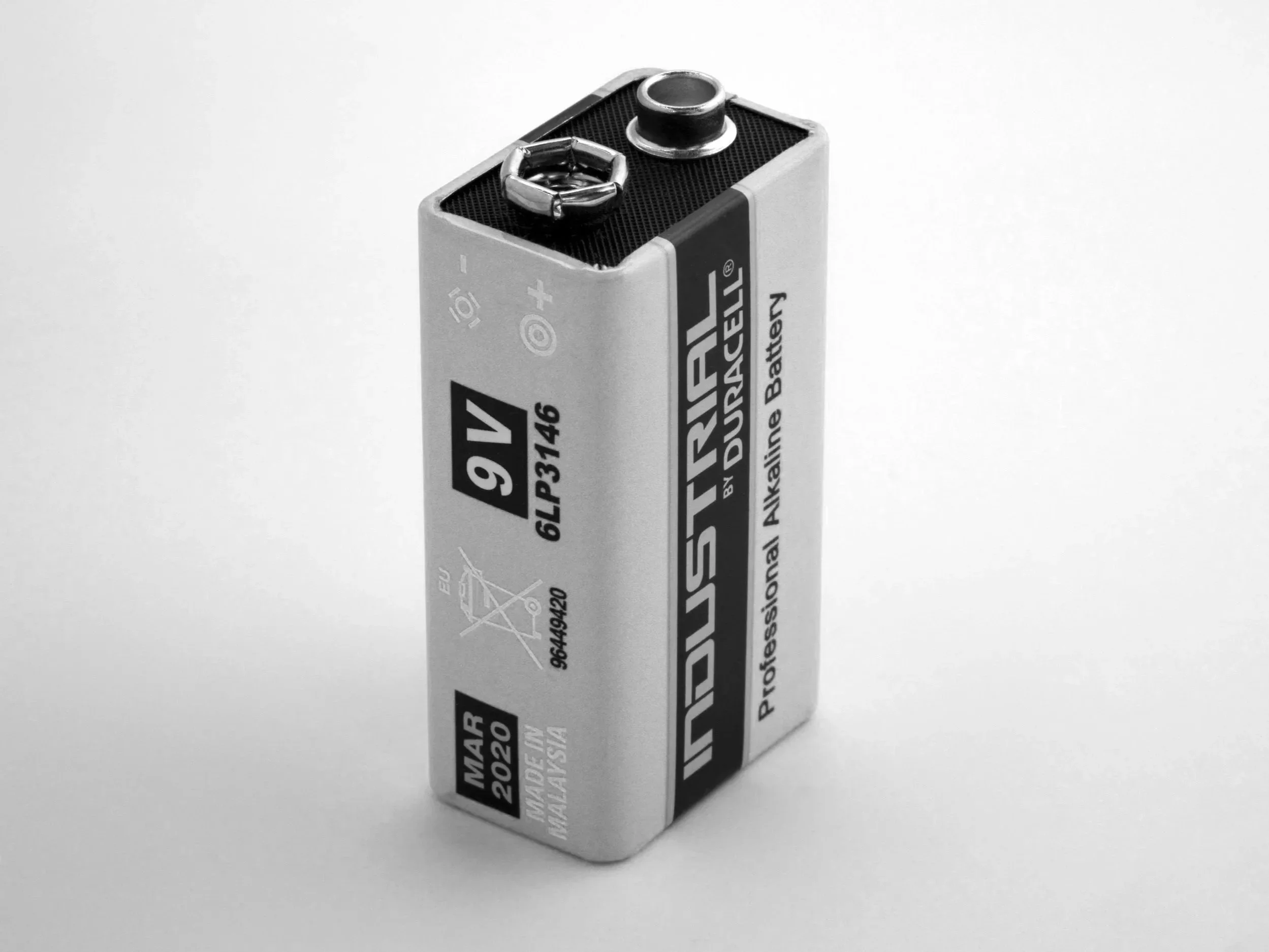
Exemption from storage network fees under Section 118 of the Energy Industry Act: Drastic cuts averted
The Federal Network Agency (BNetzA) has abandoned the plan, considered at the beginning of the year, to retroactively eliminate the storage exemption. The protection of legitimate expectations under Section 118(6) of the Energy Industry Act (EnWG) remains in place: Battery storage systems for which a final investment decision was made before the AgNes regulation took effect and which are commissioned by August 4, 2029, retain their 20-year grid fee exemption. The new sticking point is the definition of this investment decision.
At the beginning of 2026, the agency had still been considering “retroactive application”—that is, applying the new system to storage facilities that were already planned or under construction. This sparked massive opposition, as billions in investments had been calculated based on the existing exemption. In the overall concept dated May 27, 2026, the BNetzA stated, contrary to its previous announcements, that the protection of legitimate expectations for storage facilities remains unaffected. The industry views this as a conditional all-clear.
Who retains the protection of legitimate expectations
| Constellation | Protection of legitimate expectations |
|---|---|
| Commissioned after August 4, 2011, within 18 years | protected |
| FID prior to the AgNes regulation taking effect + commissioning by August 4, 2029 | protected |
| Commissioned before August 4, 2011, or the 10-year full exemption has already expired | no protection |
| Source: BNetzA Comprehensive Concept, May 27, 2026; legal analysis by CMS, Rödl & Partner, ZfK, and others (June 2026) | |
The protection applies for a maximum of 20 years from the date of initial commissioning (for expanded pumped-storage facilities, 10 years from the date of expansion). Where this protection does not apply, grid-connected storage facilities will in future—like generators—pay a capacity charge of 4 to 7 EUR/kW per year, excluding time-of-use charges. System-connected storage facilities are treated together with the system to which they are connected; amounts drawn and fed back into the grid remain exempt from capacity charges. This moderate level is below the viability threshold of 6 to 10 EUR/kW cited by BVES and ECO STOR.
The unanswered question: What constitutes the final investment decision?
This is precisely where the dispute lies. According to the BNetzA, a FID is deemed to have been made when binding orders for components amounting to approximately half of the investment volume are in place, these contracts cannot be rescinded without significant financial loss, and a binding grid connection commitment also exists. The exact details have not yet been finalized—and will determine which projects qualify for protection in a timely manner.
For investors who combine solar PV and battery storage, this timeline is a key factor—learn more in our overview of battery storage as an investment and its revenue streams, as well as Section 14a of the Energy Industry Act (EnWG) and the taxability of storage systems.
Note: The protection of legitimate expectations under Section 118(6) of the Energy Industry Act (EnWG) is the subject of ongoing proceedings. The FID criterion has not yet been definitively defined. Please review the current legal situation or consult a legal advisor. As of June 2026.
Dynamic grid fees: Timeline postponed
Dynamic, time- and location-based grid fees are coming—but later than originally planned. According to the overall concept, they will not start in 2029: for energy storage systems with their own grid connection at higher voltage levels, no earlier than 2030; for feed-in providers (except offshore wind), no earlier than 2032 and no later than 2035. The existing model will continue to apply to controllable consumers.
The incentive mechanism is to be implemented through dynamic electricity prices, which are set the day before in 15-minute intervals and published prior to the day-ahead auction. This flexibility makes grid usage more expensive during peak hours and rewards off-peak periods: those who feed power into the grid or consume it when the grid is less congested pay less. This creates incentives for the energy system to provide more system services—while the phased introduction also gives investors more lead time than initially anticipated.
Regardless of AgNes, a three-tier model is already in place for metered consumer facilities: Since April 1, 2025, all distribution system operators have been required under Section 14a of the Energy Industry Act (EnWG) (Module 3) to offer time-of-use grid tariffs. For PV systems with battery storage, this already means charging at low rates when the grid is available and discharging during peak demand periods.
| Scenario | Potential savings |
|---|---|
| Module 1 — Flat rate for controllability (4.2 kW and above) | $110–$190 per year |
| Module 3 — Household SH, 4,500 kWh of controllable consumption | up to €421 per year |
| Dynamic electricity rate + dynamic transmission charges | up to 68% off the fixed price |
| Sources: Grid operator calculations; 1KOMMA5°/Destatis study 2025 | |
A study by Neon/Consentec shows that a congestion-based dynamic electricity price can reduce redispatch costs significantly more than alternative models and increase the economic value added of a storage facility by about 30%. The article on battery storage and solar power arbitrage as an investment strategy explains how this revenue potential translates into returns.
Note: The implementation years 2030 and 2032–2035 are projected figures from the overall plan. Potential savings are based on model calculations and do not guarantee individual results. As of June 2026.
The 2026 Grid Package: Status and Redispatch Provision
The Federal Ministry for Economic Affairs and Energy’s (BMWE) “grid package” remains a draft bill—it has neither been approved by the cabinet nor introduced in the Bundestag; the coalition partner SPD has called it “unacceptable.” It contains a controversial redispatch clause that would exclude new facilities in heavily utilized grid areas from compensation for up to 10 years.
The draft includes three provisions relevant to PV: a redispatch reservation in “capacity-limited” grid areas (for systems with a curtailment rate of 3% or more in the previous year, with up to 10 years without compensation), independent prioritization of grid connections by grid operators for systems with a rated output of 135 kW or more, and the abandonment of the first-come, first-served principle. There are concerns under European law regarding the redispatch reservation, as Article 13(2) of EU Regulation 2019/943 generally provides for compensation in the event of redispatch.
Anyone investing in solar power or planning a solar installation should assess the grid capacity at the site early on. Logic Energy evaluates grid connection options as part of the project planning process. For a more comprehensive overview of grid connection issues—especially for large-scale installations—see the article on KraftNAV and photovoltaics: What the grid connection reform means.
Note: The Network Package is a draft bill and has not yet entered into force. All information is based on the current draft under discussion. As of June 2026.
Three scenarios depending on the timing of the investment
PV investors face three different scenarios, depending on when a system goes online. The greatest planning certainty is provided by commissioning by the end of 2028, combined with a final investment decision before the end of 2026. The least favorable position is for projects that come online entirely under AgNes starting in 2029.
| Criterion | Scenario 1: through the end of 2028 | Scenario 2: 2027–2028 | Scenario 3: starting in 2029 |
|---|---|---|---|
| Grid Tariff Regulations | StromNEV (known) | StromNEV + Key Figures Announced | AgNes in full |
| Protection of Confidential Information in Storage § 118 | secured | secured (FID + IBN ≤ August 4, 2029) | only with FID protection |
| Current Feed-in Capacity Price | none | none (protection of legitimate expectations) | €4–7/kW/year (> 30 kW) |
| Dynamic grid fees | Module 3 is available | Module 3 is available | Module 3 + AgNes (starting in 2030/2032) |
| Planning certainty | High | Medium | Low |
| Our own classification based on the AgNes comprehensive plan dated May 27, 2026 | |||
The key factor is the FID window: Anyone who makes the final investment decision before the regulation takes effect (expected by the end of 2026) and begins operations by August 4, 2029, secures both the 20-year storage exemption and the exemption from the new feed-in capacity price. At the same time, system costs continue to fall—according to Fraunhofer ISE, the turnkey benchmark stands at around 1,015 EUR/kWp. The combination of falling project costs and regulatory grandfathering makes the case for investment decisions in the next 12 to 24 months.
Check location
Clarify grid connections and congestion issues early on—also with regard to the grid package.
FID by the end of 2026
Make the final investment decision before the AgNes regulation takes effect.
Valid until August 4, 2029
Commissioning by the deadline ensures the 20-year storage exemption.
Storage for grid use
Designing battery storage systems for dynamic pricing starting in 2030 — flexibility as a factor in return on investment.
The three scenarios are based on the situation as of June 2026. Regulatory changes could significantly alter the cost-benefit ratio. This is not investment advice. As of June 2026.
How will the AgNes reform affect your returns?
Logic Energy analyzes grid connection conditions, AgNes cost trends, and site-specific risks for every project—and calculates how each scenario affects your return on investment.
Free and with no obligation.
Conclusion: A basis for planning, not a halt to investment
The AgNes reform is the most significant change to grid tariffs in decades—but it does not put an end to the investment logic; rather, it reinforces it. Investors should keep three points in mind: First, starting in 2029, capacity-based generators will be subject to an annual capacity charge of 4 to 7 EUR/kW. Second, the storage exemption under Section 118 of the Energy Industry Act (EnWG) remains in place—investments made before the final investment decision (FID) deadline and commissioning by August 4, 2029, protect this entitlement. Third, dynamic grid fees will not be introduced until 2030/2032; those who operate battery storage in a grid-friendly manner will benefit from this.
Self-consumption remains significantly more valuable than simply feeding electricity into the grid; the production costs for solar power continue to fall; and battery storage is becoming a mandatory component under regulatory requirements. In-depth analyses are provided in the articles on the amendment to the Energy Economy Act (EnWG) and its implications for PV investors, as well as on PV systems with battery storage and co-location as a factor influencing returns.
Disclaimer: This article is intended solely for general informational purposes and does not constitute investment, tax, or legal advice. Return figures are based on historical data from the Helm Group and are not a guarantee of future results. Information regarding laws and procedures is current as of June 2026—ongoing proceedings (AgNes, Netzpaket) are subject to change at any time. For advice tailored to your individual situation, please consult a licensed advisor. All information is provided without warranty. As of June 2026.
FAQ
-
The Federal Network Agency (BNetzA) has presented an overall concept for the future grid tariff system that consolidates the existing guidelines. This is not yet a final draft—that will be released in the summer of 2026 for public consultation, with the final decision scheduled for late 2026. The system will take effect on January 1, 2029.
-
Yes, contrary to initial expectations. Generation facilities with power metering (starting at low voltage) will pay an annual capacity charge of initially 4 to 7 EUR/kW starting in 2029, excluding the energy price. Facilities that go into operation before then or are covered by the principle of protection of legitimate expectations are exempt. Plug-in solar and prosumer/home storage systems (low voltage up to 30 kW) remain exempt from charges; the exact de minimis threshold has not yet been finalized.
-
Yes. The Federal Network Agency (BNetzA) has dropped the retroactive cancellation. The protection of legitimate expectations under Section 118(6) of the Energy Industry Act (EnWG) remains in effect for storage facilities for which a final investment decision was made before the regulation took effect and which were commissioned by August 4, 2029, for a maximum period of 20 years. The exact definition of the final investment decision (FID) has yet to be determined.
-
Later than planned. For energy storage systems with their own grid connection at higher voltage levels, no earlier than 2030; for feed-in operators (except offshore wind), no earlier than 2032 and no later than 2035. For controllable consumers, the three-tier model under Section 14a of the Energy Industry Act (EnWG) has been in effect since April 1, 2025.
-
A draft bill from the Federal Ministry for Economic Affairs and Energy (BMWE), not yet approved by the cabinet. At its core is a redispatch clause: in grid areas where curtailment exceeds 3%, new plants could be ineligible for compensation for curtailment for up to 10 years. Prioritization applies to plants with a capacity of 135 kW or more. A significant revision is considered likely.
-
Those who act early secure more favorable terms—particularly through the FID window and commissioning by August 4, 2029. Return estimates (Helm Group: 6–10% p.a.) are based on historical data and do not guarantee future results. The contractual partner for PV direct investments is mediplan Helm e.K. (a registered merchant with personal liability of the owner pursuant to Sections 1, 17, 19 of the German Commercial Code (HGB)).
References
Federal Network Agency — Overall Concept for the Electricity Transmission Tariff System (AgNes), Press Release and Background Paper — May 27, 2026 (GBK-25-01-1#3)
Federal Network Agency — Guidelines on Storage and Feed-in Tariffs (AgNes Procedure) — January 16, 2026 / February 20, 2026
CMS — “Update on the AgNes Proceedings: Current Considerations by the BNetzA” — May 29, 2026
Rödl & Partner — “Federal Network Agency Outlines Details of AgNes Grid Tariff Reform” — June 10, 2026
ZfK — “Grid Fee Exemption: The Time Pressure on Battery Storage Is Mounting” — June 4, 2026
pv magazine — Coverage of the AgNes proceedings and storage network fees — 2026
VKU — Press Release on Storage Network Fees in the AgNes Proceedings — 2026 (Ingbert Liebing)
IWR — “AgNes Interim Report: Associations Praise Protection of Legitimate Expectations, but Warn of New Investment Risks” — May 28, 2026
BDEW — Electricity Price Analysis — January 2026
IMK / Hans Böckler Foundation — Investment Needs of German Power Grids Through 2045 (IMK Study 97) — December 2024
Fraunhofer ISE — Study on Levelized Cost of Electricity for Renewable Energies — July 2024
Helm Group — Portfolio Return Data for 2024 (6–10% p.a.) (internal data, no public link)